With an estimated market value of $10.7 billion, the automated lending wave is not expected to crest anytime soon.

Market value is expected to increase nearly 100% to $20.5 billion by 2026 on the back of diversifying consumer needs and an uncertain COVID-19 situation, according to a study by market research firm Markets and Markets.
For projected growth to continue, however, credit determination and underwriting must go beyond currently accepted standards, David O’Connell, analyst at Aite-Novarica, told Bank Automation News.
“Many lenders determine credit lines by examining cash flow based on bank data, and then applying a multiple that reflects their risk appetite,” O’Connell said. “I think this is too blunt. It doesn’t consider different types of borrower needs.”
Lenders must connect digitally to gain customer insights as well as adjust for business strategy and experience gaps in the automated lending business model, he added.
Tap into digital customer insights
Access to customer insights, both financial and personal, are “super important” in the digital credit determination and underwriting process, according to Kathryn Petralia, co-founder of fintech Kabbage.
“You have to be able to not only understand how much capital your customer can accommodate, but also when that data changes and when you need to adjust,” Petralia told BAN.
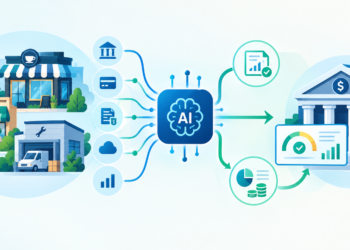
Use of in-house and third-party application programming interfaces (APIs) to access customer data helps lenders stay dynamic in selecting and distributing capital. The process is not just limited to APIs, O’Connell noted. To expand from credit provider to trusted advisor, lenders must integrate on all levels.
“Integrating over the borrower’s firewall is important because you want not just the credit relationship, but all the non-credit stuff, like cash management, payroll and deposits,” O’Connell added.
Enhance credit determination processes
Automated lenders often use cash flow as the deciding factor in their credit determination processes, which may prove problematic if other figures are not considered. A customer is more than their cash, O’Connell said.
“When lending analysis is done at too high a level, there is speed,” he said. “However, there isn’t always a granular matching of the extendable credit with the borrower’s needs, collateral and capital plans.”
A focus on convenience and quick access to capital may alter or harm the credit quality that a customer receives. To counter this, lenders should utilize an automated determination process where debt, collateral and assets are factored in according to term length. This will allow speed and convenience to be maintained without sacrificing quality.
While factoring in complex customer data sets is important to distribute high-quality loans, cash flow remains the defining snapshot of creditworthiness for small businesses, Eric Steinhoff, executive vice president of client services at automated underwriter Scienaptic AI, told BAN.
“Stability of cash flow is one of the most important underwriting components, because there’s a much higher chance that a small business will not be able to replace lost income,” he said. “Humans can generally replace income while businesses generally can’t.”
Adapt to gaps in digital lending business model
While automated lenders may win the speed battle, O’Connell said that flaws in the business model must be factored in.
“If you’re talking about the newer alternative lenders, they run into a lack of acquired wisdom,” he said. “This was evident with the onset of the pandemic when a handful just didn’t make it.”
Many digital lenders lack the experience to manage hiccups during an economic downturn, an issue from which legacy banks and lenders may not suffer. “The online alternative lenders have been through too few downturns to know how to handle things in a bad credit cycle,” O’Connell said.
Digital lenders must adapt to areas where legacy lenders maintain an advantage, such as providing deep subject matter expertise for small businesses for any credit-related issues.
“If digital lenders are over-focused on just lending, they run into the traditional banks’ breadth of non-credit products needed by SMBs,” O’Connell told BAN. “Owners of small businesses know that they are going to run into finance-related problems, but they have no idea what they’ll be like.”
“They prefer to do business with institutions that have borrower-facing people that can help them do things like handle a letter of credit or help their accountant avoid phishing scams,” he added.
Bank Automation Summit, taking place March 1-2 in Charlotte, N.C., is the first and only event to focus solely on automation in banking. The event will feature the brightest minds from across financial services on intelligent automation strategies and deployment. Learn more and register for Bank Automation Summit 2022.