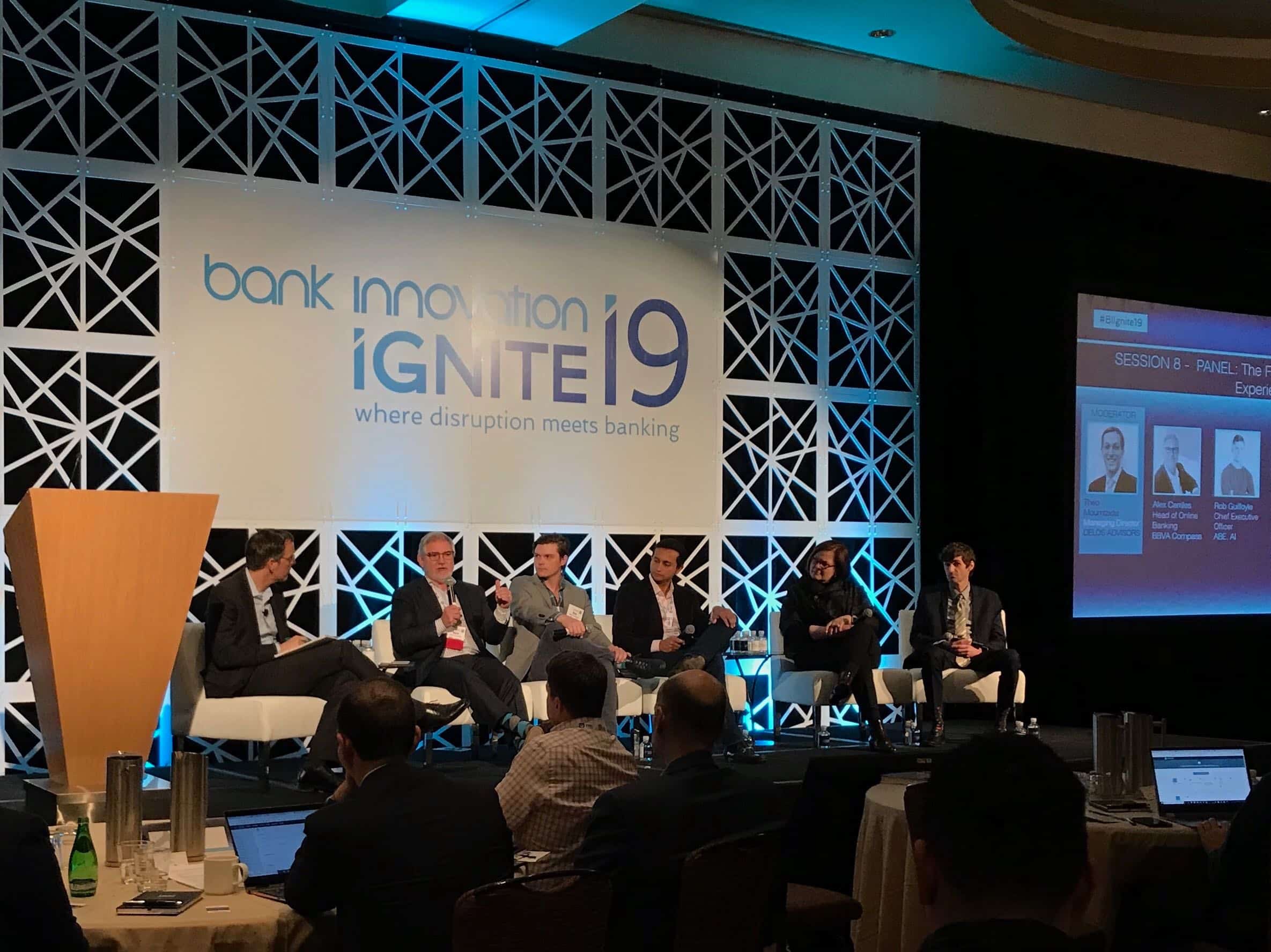
When it comes to innovation, banks in 2019 should look to partner first, buy second and lastly build, Jeremy Balkin, head of innovation at HSBC Bank USA said at BI Ignite 2019 in Seattle earlier this week.
It makes more sense for banks to make a strategic investment in fintech companies than to try and build technology in-house, Balkin explained. This is not only because the time-to-market period is much shorter, but also because the best tech experts are in fintech, not banks, he said.
Balkin, who oversees all innovation and fintech partnerships at the bank, said he prioritizes innovation to improve customer experience, which comes down to improving “speed, efficiency, and adding customer delight.” The next area that ranks high on the bank’s innovation map, he said, is value creation, which could mean cutting costs, uplifting existing revenue streams or creating new ones.
Another category on Balkin’s list is “employee-focused innovation.” This ranges from things like backend automation to unburden employees to other technologies that will help retain and attract talent. “Basically, any innovation that will make the best people stay,” he said.
HSBC Bank USA’s unveiling of Pepper, a robot operated by SoftBank Robotics, in its Seattle headquarters at the BI Ignite conference is a combination of investing in customer experience and employee experience, he said.
The bank launched its first Pepper robot in its New York headquarters in October 2018. The robot has helped the bank increase foot traffic in that branch by 5 to 10 times as well as increased the branch’s new business by 44%, Balkin previously told Bank Innovation.
Also Read: HSBC Employs a Robot to Increase Branch Traffic [Video]
Pepper is only one part of the HSBC’s innovation plans, Balkin said. This plan includes revamping its core, as well as partnering with fintechs to deliver advanced digital products and services. Balkin was not the only one who spoke about the advantage of banks partnering with fintechs for innovation.
Matt Oppenheimer, co-founder & CEO of cross-border money transfer company Remitly, explained at BI Ignite that banks have the advantage of consumer trust, compliance and scalability, and resources, while fintechs have the advantage of agile technology minus the legacy cores. Both, he said, can leverage each other’s strengths in partnerships.
HSBC prefers to innovate by partnering with fintechs or, as Balkin put it, “borrow technology,” from fintechs. In the past year, the bank partnered with Chicago-based lending platform Avant to provide fully-digitalized consumer loans.
“Credit decision happens within minutes and funding within 24 hours of decisioning,” Balkin said, “which is unheard of for a traditional bank.”
The total process of integration with Avant also occurred with “lightning speed,” Balkin said. From signing the partnership deal to making the product available to customers, the entire process took two years, he said.
HSBC also partnered with Providence, R.I.-based wealth management platform Marstone to deploy an end-to-end digital experience on both the customer-facing side and the backend. In October of last year, the bank struck a deal with Samsung to give HSBC employees Samsung wearables intended for in-branch communications between employees.
HSBC Bank USA has $203.7 billion in assets and serves 2.4 million customers across its various banking divisions of retail, wealth management and corporate, according to its website.