Podcast: Casca CEO Lukas Haffer on opportunities for AI in small business lending
SBA loans can take 90 days to close

Small business owners need fast access to capital, with fair rates.
That’s the reality that Lukas Haffer, chief executive of AI-native loan origination provider Casca, tells FinAi News on this episode of “The Buzz” podcast.
For small business owners, the “No. 1 problem is access to capital,” he says. The time it takes to close a Small Business Administration loan, one guaranteed by the SBA, is 90 days, Haffer says.
No one has time for that, he says. And this is where AI and a streamlined experience come in.
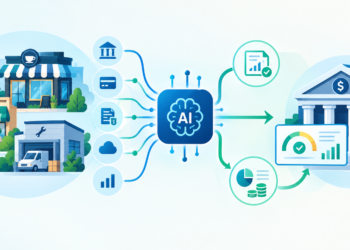
Manual procedures in the lending process, including document collection, analysis and communication, can be streamlined with AI, he says. In fact, Casca is working with financial institutions to do just that.
For example, when a client sends an email, creating a response that includes personalized messaging, previous correspondents, and necessary information, it can take 20 to 25 minutes, Haffer says. With Casca, that message can be created in 63 seconds.
Casca, founded in 2023, continues to grow. Its most recent fundraise consisted of $29 million in a series A round, bringing total funding to $33 million, according to the company. The round was led by Canapi Ventures. Live Oak Bank, Huntington National Bank and Bankwell Bank also participated.
Listen to “The Buzz” as Haffer discusses the opportunity for AI in small business lending and where Casca plans to expand its business.
Register here for early-bird pricing for the inaugural FinAi Banking Summit 2026, taking place March 2-3 in Denver. View the full event agenda here.
Subscribe to The Buzz Podcast on iTunes, Spotify, Google podcasts, or download the episode.
The following is a transcript generated by AI technology that has been lightly edited but still contains errors.
Whitney McDonald 11:17:02
Hello and welcome to The Buzz a FinAi News podcast. My name is Whitney McDonald and I’m the editor of fin AI news. Fin AI news has rebranded from bank automation news, marking the next step in our mission to lead the conversation on innovation and Financial Services Technology. Joining me today, November 11, 2025 is Lucas Hafer, CEO of AI native loan origination provider, Casca. Lucas, is here to discuss the role of AI in streamlining the lending process, specifically for small businesses. Thanks for joining us,Lukas Haffer 11:17:31
Lucas, of course. Thanks for having me. Whitney, I’m Lucas. I’m the CEO and one of the two co founders of Casca. I have a background in banking software. I basically spent my entire career building, maintaining, deploying core banking systems, not a career I can recommend to anyone. Core banking systems are a pain, but it did give me a pretty solid understanding of how the underlying it, infrastructure of a bank really works all the way from the mobile and online banking at the front to the connection to the exchanges, the payment rails, the regulatory reporting on the back. And then I spent two years at Stanford really diving deep into computer science and machine learning. And at the end of it, started Casca with a mission to bring the innovation and technology that I saw in academia and research back into the real world, into the world of banking that I had spent my entire career in, to have a real world impact, to automate tedious, repetitive work and lead to magical, better customer experiences.
Whitney McDonald 11:18:35
Well, we will definitely get into all of that, the AI behind Casca, and how that all works. But before we do, let’s kind of talk bigger picture here. We’re going to talk through the state of small business lending. Where are there gaps here? Where can AI fit into those gaps? But let’s kind of, you know, start back one step and just talk about the gaps that need to be addressed in the small business lending space.
Whitney McDonald 11:19:01
Yeah, let’s talk about the reality of running a small business in the United States. Your number one problem is access to capital, regularly cited in surveys and statistics. And if you talk to a small business owner, what they’ll tell you is that if you’re looking for capital for your small business, you’re not going to Silicon Valley venture capitalists. You are looking for a loan, and you have two sub optimal alternatives right now. You either go to a bank and they will give you if you go to the right one, the best conditions, the lowest interest rates, the best terms, but it’s going to take forever. The average time to close an SBA loan, that’s one that’s guaranteed by the Small Business Administration. That’s typically the best funding for a small business owner that’s starting out, trying to expand, trying to acquire another business. The average time to close one of those is 90 days. And let’s be real. Ain’t nobody got time for that 90 days you are trying to get that funding for that big inventory purchase, for that big contract that you just won. If it takes 90 days to get the funding, you might lose out on that business opportunity. So the second alternative that many small business owners now fall prey to is the tremendous number of predatory online lenders that have spawned up that will give you the funding really, really quickly, and then you have a rude awakening when you realize now you’re paying 45% APR I now see On a regular basis, small businesses apply for funding through our system that have merchant cash advances on their balance sheet that clock in at aprs above 100% and I don’t know about you and about our listeners here, but to me, that’s not okay, that is not adequate, that’s not ethical, that’s not moral. I don’t even know how that stuff’s legal, but we’re in America, so our response is we compete on the open market. The banks have the better interest rates. They have the better conditions. What they lack is the technology to compete with the online lenders, and that’s where Casca comes in. Our mission is to help the trusted banks in America to put additional billions of dollars of funding into the hands of small business owners by giving them the technology that they need to do it faster and with less manual effort.Whitney McDonald 11:21:27
Let’s talk about some of the manual effort that still exists in the in the lending process that does hold up, you know, speed to lending and how AI can address those gaps.Lukas Haffer 11:21:37
Yeah, I mean very practically. If you’re a small business owner, you’re looking for funding, you go to the bank’s website, and the first problem is you’re searching for that apply now button where you can start your application. Many times it doesn’t even exist. Many times there’s a little contact form or a list of email address. Of loan officers to reach out to, which immediately causes churn. That’s an opportunity for any bank to make an immediate impact, even before we think about AI just have a proper online application. Problem is now with this process, you end up in 90 days of back and forth emailing, because the process starts in email, it continues an email. And what happens over those 90 days is you reach out, I would like some funding. Here’s a little bit of information about my business. You get back a list of questions you answer to the questions. You get a list of more questions you answer to those questions. You get a PDF form. You fill out the PDF form, you get feedback. The PDF form was filled out the wrong way. You fill it out again, and that process continues until the bank has gathered all the information they need to make a good underwriting decision, which typically is multiple years of tax returns, bank statements, projections based on the management’s view on to the company. And because it’s all manual, emailing back and forth. That means there are two three day turn times between each of these cycles. That’s how you get to 90 days. It’s 90 days of I respond to the banker on Saturday, because throughout the week I’m running my business, the banker is not working on Saturday. So now on Monday I get the feedback. Well, Monday is the busiest day in my business, so I’m going to respond whenever I get the time, maybe on Wednesday night, and then the banker responds to me Thursday morning. Now I’m busy, and I’ll respond the next time on the weekend. And now the exchange of just a little bit of information took forever. Once the bank has all the information that they need. Now they need to analyze all of that information right now that’s completely manual. That’s people pulling up on one screen a PDF and on another screen an Excel sheet, and then they type things from a PDF into an excel sheet to calculate the spreading of the financials of the business, see whether the business is actually going to be able to repay the loan, and with the number of sheer documents that you collect for the average small business loan, this might take days, maybe even weeks. It’s 1000s and 1000s of pages that are manually reviewed and pulled over, and that’s just the beginning of the process. There are many more steps in order to actually compliantly close one of these loans, and all of it can actually be tremendously automated using a combination of beautiful online experiences in an application form, an applicant portal to let people self guidedly Go through applications, AI to answer simple questions for folks and follow up with them at the right points in time, and then AI to analyze all the information that came in and hundreds and hundreds of integrations with third party data sources like the credit bureaus and the Secretary of State, to gather all the information that an underwriter needs in order to make a proper decision on whether the business is going to be able to repay the loan. So that’s what cascade us. We help get the small business owner, in a self guided manner through the entire flow, and we help automate the analysis on the side for the underwriter.Whitney McDonald 11:25:13
It’s really interesting when you put into perspective the days it takes to get back and forth. You know, Monday is a busy day. I’ll get back to you this day and, you know, the back and forth, and it’s kind of like this unending cycle that can, you know, last up to 90 days. Is there any way to quantify savings that Casca clients are seeing when they do streamline these processes. How much you know time is being saved on that back and forth?Lukas Haffer 11:25:41
Yeah, I can give you three statistics here. Number one, this like anecdote around someone responding on the weekend isn’t just an anecdote. We now have the statistics and 63% of all interactions happen outside of banking hours. That means nights and weekends. And it makes sense, if you think about it, right? It’s a small business owner. They’re busy throughout the week. Our peak time of interaction every week is Friday night, 10:30pm again. Think about it makes sense. It sounds curious in the moment, but then think about it. It is a small business owner that just closed up the shop for the week, brought their kids to bed and is now ready to do their admin work of applying for that funding they need. Right? That is first of all statistic. This is literally what we’re seeing. And if you talk to small business owners, they also don’t want to talk on the phone with a loan officer about the loan funding they are applying for in front of their employees. They don’t want to do that throughout the week. They also don’t want to miss a day at work. They are usually one out of 1520 people running the thing. They are not managers CFOs accountants that just oversee the business they are in. It. They are living in it. They are running their small business. They don’t have time to go to the bank branch either during the week. So we live in a reality where you need to meet the small business owner where they are at, and you need to meet them during that times. Next statistic, what we see with these typical you can reach out online, fill out a contact form, we’ll send you an application. Is roughly 90% of people churn. And it makes sense again, right? You’re trying to get this done, and then all you’re met with is, let’s make an appointment. And you realize you don’t have time for this. So you go to the next link on Google, and it is some online lender that says, close in 15 minutes, and you say, that’s the only thing I can reasonably do. Or you go through the third turn of questions, and you realize this is taking forever. You don’t even know whether any end is inside. No one is giving you a clear direction on how long this is going to take. And so you turn in that moment. That’s why we see extremely high churn rates throughout these long, slow, complicated processes, and what we’ve seen when we took loans out of that into a paradigm of the small business owner can go through the online application completely on their own time, upload all the documents, get instant feedback as they go through the process, whether they check all the boxes, all the criteria that the bank has, and then can get feedback. Within 24 hours, we see conversion rates skyrocket to above 80% of people submitting full application forms, and that leads to banks just straight up closing more loans. That’s a that’s the second part of this here. On the other side, let’s look at what it takes to do follow ups with applicants over email, because you’re not getting completely out of email communication. There’s no way small business owner, busy CEO, running his business, if you send him a list, even if you send him a list of here are the like five documents I need from you in order to make a decision. And here’s a link to some people will anyways, respond via email. They won’t log into the portal. They will respond via email. And banks might try to re educate their customers, but that’s not your job. Your job is to treat every customer like the only customer need to meet them where they are at and the end result is they send you documents via email. You take the documents, you put them in the right place, and you respond to them over email. So how long does it take someone to formulate the right email if all of the information that’s necessary to write that email exists on sticky notes on your computer and within a 25 year old loan origination system, and some of it you need to come up with on the spot, some of the documents that were submitted exist inside of your email. Some of them might have been uploaded to a Dropbox somewhere, and you spend all of your time putting checklists against what do I have? What was my last message with them? It takes you between 20 minutes, 20 and 25 minutes, that’s what we’re measuring there, to have a full, full follow up email sent out to the customer that reflects all of the questions that they asked you and your responses that reflects what are the outstanding documents that we still need and what are the questions that I still have for them? While on our side, we have all of that information within one single pane of glass, because Casca is the system of record about the customer information. It is the workflow system for the origination process, and it is the CRM system for the communication with the customer. So I know exactly what information I have on the customer, what documents they have submitted. I know which ones I need in order to get them into underwriting and which ones are still missing, and I can immediately draft up a follow up message, send it out via email, SMS, and it takes someone on average, 63 seconds to approve that message to go out. So that is just me putting right side, here’s the message that the system drafted for me. Left side, here’s information that we have and information that we still need. My job is just to confirm send it out hyper personalized message that increases conversion rates, makes the customer feel like they are the only customer, because they’re getting that special white glove treatment. But it didn’t take you half of a day to respond to your 1015, leads. These are the three statistics I got for you, higher conversion rates, less manual effort, and lots of people apply on weekends.
Whitney McDonald 11:31:23
Yeah, no, when you can quantify and put numbers, it really puts into perspective here, especially, you know that last number that you were just sharing, you know, from 25 minutes down to about a minute 63 seconds, I think what you said, the numbers speak, speak for themselves, in what technology can do, in in streamlining, one the process for the lender and, you know, getting those conversions, but also getting the funds into the hands of the small businesses, which is, you know what, what it’s all about. Talk through some examples here. I know recently that Casca just closed. Those 29 million and some in series a funding, wondering if you could talk a little bit about that capital, what that’s being allocated to, kind of tell us a little bit about the plans for Casca. I know you talked through examples of how the technology is being used. You know, it’s it’s in action at these institutions, giving these quantifiable results and returns, but what else is is in the pipeline? Yeah,
Lukas Haffer 11:32:21
it’s an incredibly exciting time for us. We are very proud and grateful for the support of our investors, most of which are existing customers. We, as a technology company, see ourselves as the champion of the American banking sector, for the American banking sector. So our series, a funding round, was led by canopy ventures, which represents roughly 70 of the US banks, alongside Live Oak Bank and Huntington Bank, which are the top two SBA lenders in the country, and our existing first customer, bankwell Bank, a wonderful community bank out of Connecticut, as well as a number of existing investors that double down investors from Silicon Valley, like Y Combinator, the number one startup accelerator in the world, and a private equipment lender called Alliance Funding group, we are super excited about these investors specifically because it shows that we are partnering with the banks in order to develop great software that solves problems for their customers and for their team members. The way we work is to sit down with them and understand, what are you doing today? What are the things that you wish were easier? How can we reimagine processes together? And that is how we develop our own roadmap. You asked, what’s coming down the pipe? It’s always determined by what are the things that our customers are asking for? What are the things that they imagine? What are the problems they are facing that we can help resolve and we started with loan origination and making that much faster and much easier. We recently started working on loan servicing to also make sure that folks are making their payments on time, and that we check in regularly with the small businesses on how they are doing financially, to do annual and quarterly reviews with them. There’s a tremendous amount of potential in automating servicing processes, and we’re starting to work on what that can look like on the deposit side of the house as well, because banks that are increasing loan volumes also want to increase their deposit holdings?
Whitney McDonald 11:34:38
Well, you just talked through some opportunities in the space. Obviously, the reality of where AI is, how it’s being used, but the technology itself is evolving so fast, more opportunity down the pipeline, like you mentioned in servicing, you know, different processes that can be automated down the line.
Lukas Haffer 11:34:58
I think that two important things to realize at the same time when thinking about AI and banking. One, you said AI is developing rapidly. That’s true. That means that you can’t just rely on what worked today. There’s a revolution happening, and you have to react quickly to it, and you have to shift with it. And that means that use cases that weren’t possible two three years ago are now becoming possible and improving rapidly. A good example of that is financial spreading and underwriting, which really just only worked for tax return analysis because tax returns were highly structured documents. The numbers are always in the same places, at least for a given year in business type. But it never really worked for management prepared financials of a business because they are management prepared, they are unstructured. They might have any any format that is no longer the case, that is now possible. Those are the things that AI and large language models specifically have enabled. And so you can actually read through hundreds and hundreds of pages of rent roll documents that were hand written and extract the individual rent payments to assess whether a property is actually fully rented out and getting the cash flow that you’re projecting from it, those things weren’t possible before they are becoming possible as we speak. That’s point number one. The second point is, AI is not perfect, and that means, in a highly regulated sector, you need to build for something being probabilistic, not deterministic. So there is a chance that the number it extracts from the document is wrong, which means you can’t just let the thing extract the number and make an underwriting decision based upon it. What you need to think through is how you can build it human in the loop, how you can build it fully auditable and fully explainable. So what this means is. Instead of just saying I got the debt service coverage ratio of 1.25 for this business, so it meets our criterion, instead you say I expected at least 27 different values from this document, and I’m showing them to you. Left side, all the values. Right side, here’s the document and exactly where I got them all from. And if anything is wrong, you can just click a button and change it, and you can click on a different number and pull that number in instead, which makes it a power user interface, something for an underwriter that knows exactly what they’re doing to get their job done faster. That’s the human in the loop that’s making it explainable. Here’s why we pull that value out of that document and fully auditable, because you can see for each individual value where did it come from, and whether a human overrode it, validated it, or whether it was just pulled by the system.
Whitney McDonald 11:37:47
You’ve been listening to the buzz a fin AI news podcast. Please follow us on x and LinkedIn, and as a reminder, you can read this podcast on your platform of choice. Please be sure to visit us at finaI news.com. For more finaI News. Thanks for listening. You.
Speaker 1 11:39:57
You’ve been listening to the buzz a fin AI news podcast, please follow us on x and LinkedIn, and as a reminder, you can rate this podcast on your platform of choice. Please be sure to visit us at finaI news.com for more finaI News. Thanks for listening. You.
Transcribed by https://otter.ai