Five use cases highlighted at the recent virtual UiPath Summit show how banks and financial institutions apply artificial intelligence (AI) to support automatic processes as diverse as complex loan decisioning and streamlining the audit process.
Six panelists shared specific ways they saved time and resources with AI and bots while improving experiences for both employees and customers. The event, held Thursday, was one of a series of industry-specific deep dives on how AI can enable automation. UiPath is a robotic process automation (RPA) vendor.
Here are five of the use cases highlighted:
1. Streamlining the audit process
The $64.7 billion Turkish commercial bank Yapi Kredi automated part of its audit process by combining robots with AI. The original manual process involved auditors randomly pulling files to examine, which was time consuming and inefficient, said Erkut Baloglu, the vice president of process and program management at the bank.
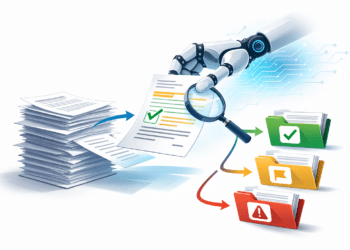
With the automated system, robots now collect information and documents to be processed with AI, which codes it as white, black or gray, depending on how suspect the data is. Then, the AI picks a sample for the auditor to examine, and robots pull more information related to the file, if needed. So, by the time auditors arrive at the bank branch, they already know which files to examine.
“The thing that the auditors like is that they are not sampling anymore,” said Baloglu. “They are looking at the whole loan universe.”
2. Predicting mortgage default to lower operational risk
Close to 4 million homeowners opted for mortgage forbearance last year, said Ramganesh Sankararamaiyer, vice president of intelligent automation with Firstsource, which provides services and solutions for call centers, background screenings, management and collections.
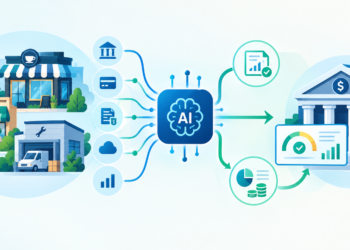
As a way to plan for pent-up demand for refinancing or selling, a mortgage servicer contracted with Firstsource to estimate the percentage of customers who would come out of mortgage forbearance. The company combined machine learning-based prediction techniques with customers’ history, credit situation, and other external data to predict loan defaults, Sankararamaiyer said.
3. Enhancing the borrower and employee experience
The process of applying for a mortgage can be document-heavy and include emails, phone calls, text messages and other communications. AI-assisted automation can help enhance the borrower experience by keeping them engaged and automating some of the communications.
“The basic idea here is to build a more of a cohesive loan application experience, which will create the borrower stickiness and also reduce my overall loan decisioning time,” Sankararamaiyer said.
The internal lending process is also usually bogged down and often involves loan processors, officers and underwriters, all with different systems, and sometimes spreadsheets or sticky notes to communicate loan status. There may be up to 32 documents at various stages of the process, all of which are required to be reviewed, matched and captured by the system of record, Sankararamaiyer said.
Firstpoint worked with one bank customer to build a solution that combined RPA and AI to extract and classify data, then orchestrate the end-to-end process and post to the system of record. Employees managed the exceptions. “It was more of a unified solution, wherein all the components were working seamlessly,” Sankararamaiyer said.
AI can automate some of the more mundane aspects of the loan process by automatically validating data against business rules, compiling and pulling data from multiple systems and updating alerts, he explained.
4. Reducing friction in document-heavy processes
Any process that involves multiple applications and documents, such as customer onboarding, presents an opportunity for automation, said William Hincher, capital markets leader at UiPath.
“Many use cases are document heavy,” Hincher said. “We need to apply something like document understanding to get that information and make it actionable.”
A case in point is $1.96 trillion Wells Fargo pilot program for onboarding automation within its commercial banking and treasury management divisions. The plan is to reduce the number of employee interactions and handoffs that occur during the process, Allyson Fleming, senior vice president of treasury management and payment solutions, told Bank Automation News. The Royal Bank of Canada has also invested in automating customer onboarding, starting last year with personal banking and SMB customers. The $1 trillion Toronto-based bank plans to automate account opening and onboarding for other business lines, said Rami Thabet, vice president of digital products at RBC.
5. Loan decisioning
Automating loan decisions dates back to at least 2015, but the more recent addition of AI allows for more complex decision making. When rules-based engines fail during the decisioning process, adding AI can make automation possible. This is helpful for loans of high variability, for example, those at risk of default.
“In order for us to make our own loan origination process more streamlined, we need to apply some cognitive capability, where rules-based flows won’t solve our problems,” UiPath’s Hincher said. “So that’s one particular scenario where we can apply some machine learning models to help us make those decisions, when there’s not a nice logic to follow.”
Bank Automation Ignite, on April 13-14, is the event for inspiring automation initiatives and investment in financial services. At the virtual event, financial services professionals can discover new use cases and technologies that are accelerating automation in banking. Learn more and register at www.BankAutomationIgnite.com.