FinAi News

No products in the cart.

Subscribe
  • News
  • AI News Tool
  • Data
  • Transactions
  • Events
    • FinAi Banking Summit
    • FinAi Lending Summit
  • Podcast
  • WEBINARS
    • Webinar Library
Log In
No Result
View All Result
  • Banking
  • Lending
  • Payments
  • Risk & Security
  • Strategy
FinAi News
  • News
  • AI News Tool
  • Data
  • Transactions
  • Events
    • FinAi Banking Summit
    • FinAi Lending Summit
  • Podcast
  • WEBINARS
    • Webinar Library
BAN PLUS
Log In
No Result
View All Result
FinAi News
No Result
View All Result

Now hiring: AI literacy moves to top of class for future bankers

43% of FIs view talent shortage as top barrier to AI adoption

Quinn DonoghuebyQuinn Donoghue
June 4, 2026
in Banking
Reading Time: 8 mins read
0
Share on Facebook

AI literacy is swiftly evolving from nice-to-have to need-to-have for young talent entering the financial services workforce. 

Ninety-eight percent of financial institutions reported using AI to some degree in 2025, according to fintech Finastra, which surveyed more than 1,500 industry executives.  

At the same time, 43% of respondents cited talent shortages as the biggest barrier to modernizing in the AI era. 

Some banks, including Grasshopper Bank, won’t even consider candidates if they don’t possess AI fluency, Mike Butler, chief executive at the digital bank, told FinAi News. 

“If you’re not a technophile AI person, you’re just not going to make it in a company like ours,” he said.  

Similarly, Brentwood, Tenn.-based Sonata Bank plans to hire employees who are AI-literate moving forward, Will Rhoads, chief innovation officer at the $250 million digital-first bank, told FinAi News. 

AI requirements  

With AI moving to the forefront of hiring, banks are honing their criteria for evaluating prospective employees who are fresh out of college or have just started their careers.

(ChatGPT/AI-generated)

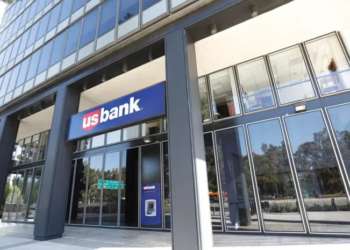
Those pursuing a career in financial services must have a “practical understanding of how AI can be used responsibly to improve productivity and work more efficiently, not just technical knowledge,” Shawn Lewis-Costen, executive vice president and chief learning officer at U.S. Bank, told FinAi News. 

Requirements include strong judgment and risk awareness, “including data privacy, bias and governance in a regulated industry,” she said. 

“Additionally, banks are looking for employees who can explain what AI and generative AI are in plain language and who understand that AI outputs are probabilistic, not factual guarantees,” Lewis-Costen said. 

Sonata Bank’s Rhoads similarly said a “core understanding” of how AI works is crucial.  

“I’m not saying that they need to be able to deploy and train their own model, but they do need to understand what [model] training means, what inference means, what the different types of fine-tuning are and how they work,” he said.  

Moreover, FIs are seeking employees who can explain the technology in a manner that could influence business decisions, Michael Sury, director of the Center for Analytics and Transformative Technologies and an associate professor of practice in finance at The University of Texas at Austin, told FinAi News. 

“That’s been a key thing for us is teaching students how to make an argument, how to be persuasive, how to interpret the output and then adapt that output for whatever the application is,” he said. 

Interview process  

To gauge AI literacy, interview questions have evolved in the past few years. U.S. Bank’s Lewis-Costen said applicants might be asked:

  • How have you used AI tools and how did you validate the results?
  • What risks does AI introduce in financial services and how should they be managed?
  • How do you determine when human judgment should play a larger role?  
  • How do you stay current on new technologies and AI usage in your field?
  • Can you describe a business problem or a case from your coursework where AI helped improve the efficiency in addressing a business problem? How did you use the tool and what impact did it have on the outcome? 
  • How would you ensure AI is used responsibly and ethically?
  • What should employees never share with public AI tools? 
  • How could AI misuse or create data security or compliance risks?; and
  • Where have you personally seen AI work well and where does it struggle?  
simply
(Courtesy/U.S. Bank)

Hatch Bank also has added AI-related questions to its interview process with top candidates, Amanda Swoverland, president at the $182 million bank, told FinAi News.  

“To me, it comes down to curiosity and openness. I don’t expect anybody coming in for certain positions to be an expert on AI, but I think that they need to be open to using it and curious to learn.” 

— Amanda Swoverland, president, Hatch Bank

Entry, mid-level roles 

For entry-level roles — often in customer service, analytics, risk management, IT or marketing — it’s crucial that applicants understand practical gen AI tools, primary causes for human-in-the-loop, data quality and escalation judgment, U.S. Bank’s Lewis-Costen said. 

Mid-level roles, meanwhile, typically require additional skills pertaining to AI, she said, such as:

  • Identifying use cases;
  • Applying AI-driven insights;
  • Coaching others; and
  • Validating AI-flagged anomalies versus false positives. 

AI literacy is especially important for entry- to mid-level jobs in risk management because they often involve repetitive processes that benefit from automation, Grasshopper’s Butler said.  

Universities step up curriculum  

Despite rapid AI adoption in banking, 76% of finance professionals say their academic training did not provide the necessary skills needed for the AI era, according to an April report by educational hub QCF Institute. 

Industry executives are concerned that the education system is restricting access to AI tools, Hatch Bank’s Swoverland said. 

But some universities appear to be turning the corner.  

The University of Texas, for example, has started implementing AI training in nearly all of its finance courses, Sury said.  

“Students are learning both the foundational analytical skills and how AI changes decision- making in finance,” he said.  

“What we’re seeing is really a shift from teaching students how to analyze data toward teaching them how to work alongside these intelligent systems.” 

—  Michael Sury, associate professor of practice in finance, University of Texas

Sury said AI-related skills being taught include:

  • Gen AI tools that analyze financial statements, earnings calls and unstructured text;
  • Prompt engineering;
  • Structuring data;
  • Market forecasting;
  • Data governance; 
  • Workflow redesign;
  • AI ethics; and
  • Translating AI outputs into business decisions. 

“Students are more and more working on real-world, project-based problems where AI is now embedded into the workflow, rather than us treating it as some standalone topic,” Sury said.  

Other universities also taking action include:

  • Ohio State University, which launched an initiative to ensure every student is “AI fluent” when they graduate, beginning with 2029 graduates;
  • University of Wisconsin and the University of Wisconsin Credit Union, which together launched a video series to teach state residents the basics of gen AI; and
  • The California State University (CSU) system, which partnered with tech giants IBM, Microsoft, Google, OpenAI and Amazon Web Services to bolster AI education for every major across all 23 CSU universities . 

Advice to young job seekers  

As AI becomes a bigger part of education curricula, future bankers can take the initiative to gain an upper hand, leaders say. 

Being able to fine-tune an AI model with confidence is one way to stand out, Jay Budzik, senior vice president and director of AI at the $294 billion Fifth Third Bank, told FinAi News. 

“That’s the kind of attitude that I would encourage folks who are early in their careers to take,” Budzik said. 

“‘How do I turn myself into an indispensable superhuman in my role, because I’m able to very effectively command these AI systems?’”

— Jay Budzilk, SVP and director of AI, Fifth Third Bank

(Courtesy/Fifth Third Bank)

Demonstrating an ability to automate data-intensive processes with AI also presents significant opportunity for junior finance professionals, Texas’ Sury said, noting that banks spend considerable time gathering data, formatting information and preparing analyses. 

“If all you are is a button-pusher, that job is pretty much going away,” he said. “If you can adapt to these new technologies, then you can contribute.” 

U.S. Bank’s Lewis-Costen said she encourages young people to gain hands-on experience using AI and learn the basics of the industry, “including regulatory and ethical context of financial services.” 

“Build soft skills like communicating insights, not just generating outputs,” she said. “Understand confidentiality and safe usage boundaries with regards to security and data privacy.” 

Understanding how poor data leads to poor outcomes also positions young people for success, Lewis-Costen said.  

Whether it’s high school, college or the early stages of a career, employers are conveying a clear message to the next generation of workers, Chris Black, CEO at the $1 billion Thread Bank, told FinAi News. 

“AI is not coming for your job; people who use AI are coming for your job,” Black said. 

Register here for the FinAi Lending Summit, set for Oct. 7-8 in Las Vegas. 

Tags: artificial intelligence (AI)FeaturesFifth Third BankGrasshopper BankHatch BankhiringNewsPremiumSonata BankThread BankU.S. Bancorp
Previous Post

Chief AI officer not needed at nCino right now, CEO says

Next Post

Hapax wants AI to build your bank’s AI

Related Posts

Fifth Third takes 'head-to-head' approach with fintechs, big banks
Banking

Fifth Third using AI to assist Comerica Bank acquisition conversion

July 17, 2026
The outside of Truist's headquarters, Charlotte
Banking

AI boosts Truist’s client interactions in Q2

July 17, 2026
wells
Banking

Wells Fargo’s AI Teammate helps advisers streamline tasks

July 17, 2026
Next Post
(AI-generated)

Hapax wants AI to build your bank's AI

EMERGING FINTECH DIRECTORY

Emerging Fintech Directory

The Buzz Podcast

SPONSORED

Build an Antifragile Strategy to Outperform the Market

July 14, 2026

How AI and Product Experts Turn Fuzzy Requirements Into Focused Dev-ready Roadmaps

April 19, 2026

Is Your Technology Supplier There for You?

April 1, 2026

  • About Us
  • Help Center
  • Contact Us
  • Privacy Terms
  • ADA Compliance
  • Advertise

 [wt_cli_manage_consent]

Connect

twitter linkedin podcast podcast podcast
© 2026 Royal Media
No Result
View All Result
  • NEWS
    • All News
    • Banking
    • Lending
    • Payments
    • Risk & Security
    • Strategy
  • AI News Tool [Beta]
  • DATA
  • TRANSACTIONS
  • EVENTS
    • FinAi Banking Summit
    • FinAi Lending Summit
  • PODCAST
  • WEBINARS
    • Webinar Library
  • SUBSCRIBE
  • Log In / Account

Welcome Back!

Login to your account below

Forgotten Password?

Retrieve your password

Please enter your username or email address to reset your password.

Log In

Unlock This Article

Create your free FinAi News account to access this article and stay informed on how AI is transforming financial services including banking, lending, payments, and risk.

Yes, I'd like to receive FinAi News updates, breaking news, and exclusive AI insights for financial services leaders.

Continue Reading with FinAi News Premium - Less than $2/Day

Upgrade to FinAi News Premium for unlimited access to news, insights, trends, and intelligence on how AI is transforming financial services including banking, lending, payments, and risk.
Upgrade to FinAi News Premium Subscription
No Result
View All Result
  • NEWS
    • All News
    • Banking
    • Lending
    • Payments
    • Risk & Security
    • Strategy
  • AI News Tool [Beta]
  • DATA
  • TRANSACTIONS
  • EVENTS
    • FinAi Banking Summit
    • FinAi Lending Summit
  • PODCAST
  • WEBINARS
    • Webinar Library
  • SUBSCRIBE
  • Log In / Account