Fintechs target 32M unbanked, underbanked households in US

With more than one-quarter of U.S. households unbanked or underbanked according to data from the FDIC, fintechs have long promised better financial access, whether through online lending that looks beyond traditional credit underwriting or digital banking startups with fewer fees.
Despite lofty promises from the financial industry, providing access to this population segment can prove challenging. This is the market that startups like Nova Credit and CredoLab are looking to as they develop technology to put financial products in the hands of consumers with thin or no-credit files.
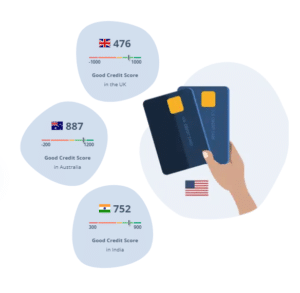
San Francisco-based Nova Credit focuses on the U.S. immigrant population, newcomers to the U.S. that have existing credit files in their home countries. The startup’s technology solution, Credit Passport, works with credit bureaus around the world to transfer those files to the U.S. Credit Passport is available for institutions like American Express and United Nations Federal Credit Union to help them reach immigrant consumers, and consumers can also go directly to Nova Credit’s website to use the solution.
The 4-year-old startup announced a partnership last week with Mitek, an identity verification technology company, to help Nova Credit clients navigate know-your-customer regulations. Consumers using Credit Passport can now take a picture of their passport and, in some cases a selfie, to identify themselves. According to Misha Esipov, Nova Credit co-founder and CEO, Mitek’s KYC solutions will also help Nova Credit access new data sets to help underwrite newcomers. Last month, the company announced a partnership with the open banking provider Salt Edge to access banking data from U.K. and E.U. consumers.
For Nova Credit, the key to cracking the thin-file consumer market is focusing on a specific subset of this population. “I think of the newcomer segment as a subset of the broader thin-file population,” Esipov said. “In order to solve that problem for just one share of the thin-file piece, we’ve spent five years building partnerships around the world and flying around the world.” The business-to-business approach can also make a bigger impact than a strict direct-to-consumer model, according to Esipov, as large institutions reach far more consumers than most startups.
While many newcomers to the U.S. have existing credit files elsewhere in the world, other underbanked consumers don’t have these pre-existing metrics to give them financial access. Singapore-based CredoLab uses smartphone and web data to help banks underwrite thin-file consumers. The company announced a $7 million Series A last month, which the company will use to further its expansion beyond its current 21 markets, including into the U.S.
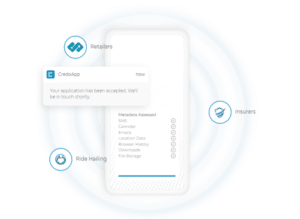
CredoLab’s technology works on the premise that, once consumers give consent, analysis of their phone or web browser interactions can determine consumers’ riskiness. The 4-year-old company examines factors like the ratio between incoming and outgoing cell phone texts, the types of apps used, and activity during the week compared to the weekend. The startup factors a total of 50,000 data points based on mobile phone behavior. For web data, the company examines factors like how long a consumer takes to enter their date of birth, and their typing speed. According to Michele Tucci, chief product officer at CredoLab, more than 98% of consumers grant access to their data, which is anonymized and kept private.
The company works with 14 banks, including the Malaysia-headquartered CIMB. CredoLab has more than 70 clients, including buy-now-pay-later platforms and ride-hailing services that offer financing to drivers. The company aims to have a go-to-market strategy in the U.S. by year-end through a mentorship with 500 Startups, a San Francisco-based venture firm with portfolio companies that include Credit Karma and Canva. As the company begins its U.S. push, Tucci said it may be better suited to target direct-to-consumer fintechs rather than big banks, which have long sales cycles and aren’t eager to reach thin-file consumers.
See also: Social media: New underwriting tool?
As personal finance management continues to evolve, banks can go beyond just providing credit to underbanked consumers. And, according to Leslie Parrish , senior analyst with Aite Group’s retail banking practice, banks must attempt to understand the hardships underbanked consumers face.
This population “may have income volatility that makes it hard to budget, or be dealing with frequent mismatches between when they are paid and when bills come due,” Parrish said. “Banks that want to truly serve this segment need to offer real-time services and actionable insights to help with these issues, and provide a mobile-friendly user experience.”
According to Tucci, the U.S. is behind the times when it comes to using alternative data to reach thin-file consumers.
“An America-centric approach to alternative data looks at transactional data first,” Tucci said, adding that this type of data doesn’t help underbanked consumers who are unable to open bank accounts. “Outside of the U.S. there is no more question that digital footprints from smartphone devices work for a credit-risk assessment, but it’s just not yet mainstream.”
The 2020 Banking Automation Summit Virtual Experience, taking place November 9-10, is a new event that will provide a platform for industry professionals to share fresh insights, tools, trends and strategies. The Summit will focus on how automation will transform banking, especially with regard to back-office operations, risk management, data science and utilization, customer experience and more. Register here.