Pin this: Big banks use Pinterest for customer acquisition

After years of banks trying to connect with customers through Twitter and Facebook, it seems the crown jewel for their social media presence may actually be Pinterest.
“It’s a more powerful way to advertise because it’s not just a generic bank ad,” said Sarika Sangwan, global head of vertical strategy and marketing for financial services at Pinterest. “The consumer puts in the search bar, ‘wedding decorations’ or ‘wedding plans.’ You know they’re in that mindset, and you get to actively give them an ad or pin around how your financial products can help them in that moment.”
Big banks like JPMorgan Chase, Bank of America, U.S. Bank, PNC and Ally all advertise on Pinterest to the platform’s 350 million monthly active users, 58% of whom expect to acquire a financial product within three months, according to the company. By attracting consumers seeking ideas for big life moments, many of which require accompanying financial services, Pinterest pitches high conversion rates to banks looking to put their brand in front of consumers at the perfect moment.
Sangwan said Pinterest users come to the platform in an exploratory mindset and ready to make decisions. When consumers are researching life moments — like a kitchen remodel or expensive vacation — they are often rethinking their financial services, according to Sangwan. If a consumer is planning for a wedding, for example, banks can advertise joint bank accounts through a promoted pin.
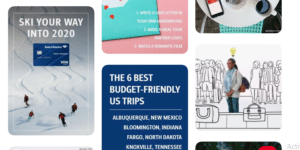
Bank of America, for example, features a promoted pin with the heading “Ski your way into 2020.” The pin explains the benefits of a winter ski vacation and proper budgeting, plus “earn unlimited 1.5 points for every $1 you spend on all purchases with the Bank of America Travel Rewards credit card.” Ally, meanwhile, has a retirement pin that promotes the bank’s IRA offer.
“Pinterest has the unique opportunity to target people who are actively planning for a big life-stage event, allowing for a more personalized message of how saving with Ally can help them accomplish their goals,” said Saloni Janveja, executive director of social media and marketing innovation at Ally. “Context is key, and if users are in the right mindset, they are more open to what we may be sharing.”

Janveja said Ally has a higher video view rate on Pinterest than other platforms. The promoted video pins focus on ways consumers can get more out of their money. The bank finds its target audience through demographic and psychographic data, as well as keywords that indicate consumers are saving for something like a vacation or home renovation.
According to Pinterest, 48% of users find financial services content helpful; 78% are open to seeing financial services content when planning life events; and 82% of all users turn to Pinterest when they are looking for a new financial product.
Although COVID-19 has halted life plans for many consumers, it seems that even a global pandemic hasn’t stopped Pinterest users from engaging with the platform. The past two weeks have seen a 40% increase in searches for “dream kitchen” ideas compared to the two weeks prior; a 37% increase in “future wedding” ideas; and a 35% increase in “dream house” ideas. It does seem, however, that consumers are also facing economic strain, given increases in “budget” searches. “Home project on a budget” searches are up 355% and “DIY garden ideas on a budget” searches are up 273%.
See also: Finance app use spikes with pandemic
According to Sangwan, banks try to avoid appearing too opportunistic on Pinterest. During the pandemic, banks have largely focused on safety measures they are taking, as well as ways customers can connect to them digitally, instead of pushing direct sales initiatives. Banks have also promoted the support measures they have in place for struggling customers.
Much of the content from banks on Pinterest goes beyond specific products to educational content, entertainment and showcasing their corporate conscience. U.S. Bank, for example, features pins thanking essential workers, like nurses and firefighters. Bank of America has pins dedicated to “low-cost activities for kids” and “cleaning hacks.”
“Banks are focused on pins that are helpful and provide utility,” Sangwan said. “During COVID we are seeing a much bigger emphasis on the upper funnel and brand messaging.”
Related Posts