MoneyLion taps Mastercard, drops Visa, readies POS finance

MoneyLion, the personal finance app turned digital bank, has tapped Mastercard to co-develop the second version of its bank account, replacing the Visa-backed checking account offered since 2018, the companies announced today. MoneyLion is already innovating ways to integrate the account into point-of-sale financing, CEO Dee Choubey told Bank Innovation.
“RoarMoney” consolidates new offerings from MoneyLion, including two-day earlier paydays, mobile wallet capabilities and contactless payments from Mastercard as well as cashback rewards. RoarMoney also takes a gamified approach to personal finance. For instance, customers can shake the mobile app when shopping for groceries, which will trigger a cashback reward that MoneyLion will then invest on behalf of its customer.
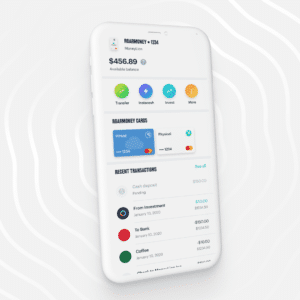
“It’s not just a digital bank, it’s also an investment account where you can have access to long-term investing strategies,” Choubey said. “Nobody needs just another bank account, that’s why we didn’t name it ‘MoneyLion Banking.’ we called it ‘RoarMoney,’ because it’s this idea of empowerment around your wallet and making that dollar do more for you in terms of a rewards perspective, a security perspective, an access perspective.”
New York-based MoneyLion has garnered more than 6 million customers since its 2013 inception, with about one-sixth of those customers holding checking accounts, Choubey said. Since its launch, the company has expanded outside of its initial lending products, adding personal finance features, robo-advisers and a digital bank account backed by MetaBank.
According to Sherri Haymond, Mastercard’s executive vice president of digital partnerships, Mastercard and MoneyLion began working together when MoneyLion still offered the Visa-backed card. “The two firms have a lot of vision and mission alignment so we’ve been working with them for quite some time. We didn’t know it was going to be called RoarMoney at the time — we didn’t know we were going to flip the program — but always sharing insights about our research, product development and insights,” Haymond said.
“Mastercard took a relationship approach to MoneyLion and we got the access to their latest technologies,” said Choubey, noting that features like push provisioning and integrating with major merchants to enable one-click checkout “were some of the capabilities brought to us immediately and that we were given access to,” he said. Push provisioning, currently being rolled out, creates a token for the consumer’s card, in this case MoneyLion Mastercard, and pushes that token directly into a merchant’s platform to enable quicker checkout, Haymond said, but declined to name any merchants.
Even before MoneyLion completes the migration of existing account holders to the new deposit account, Choubey is looking for additional ways to embed RoarMoney into customers’ everyday lives.
“We have a pretty robust lending business and we’re going to be working to integrate that lending business into the digital banking business,” Choubey said. “It’s clunky today that if you want a loan [at point of sale], you need to apply for a separate loan application … so we’re going to tie those two interactions into one conversation,” he said. The product, slated for a first-quarter 2021 launch, will allow customers to choose between the cash in their debit account or MoneyLion’s lending products for installment loans at checkout.
Beyond POS lending, MoneyLion is exploring ways to integrate artificial intelligence into the process as a way to recommend when to pay off certain installment loans to improve the customers’ credit score. That intersection between MoneyLion’s lending capabilities and the digital bank account will drive MoneyLion’s future product development, Choubey said.
MoneyLion launches the new product in a crowded field of digital banks, and will need to fight for market share among well-established players like Chime, Varo Money and Berlin-based N26, as well as robo-advisers like Wealthfront and Betterment.
“The challenge for neobanks is still how to make money,” Ron van Wezel, senior analyst at Aite Group, previously told Bank Innovation, adding that business models that offer free accounts and payments “won’t survive in the long run.”
MoneyLion uses a subscription and membership approach, with tiered payments and a revenue model based on those subscriptions, interchange revenue, net interest margin on loans, and fees merchants pay to participate in its rewards programs. RoarMoney is designed to be used in conjunction with the MoneyLion Plus and Credit Builder Plus tiers, however, for $1 a month, customers can opt in to the RoarMoney account separately.