Fiserv launches AI banking assistant

Fiserv, a core technology provider, has launched a conversational AI technology tool that allows customers to type or speak their inquiries to get real time answers and follow up actions. Lenders can integrate the new tool through mobile and online banking.
The Virtual Banking Assistant was created by Clinc, an AI development and application company trained in “financial context” to provide real time financial assistance to consumers, said Deniz Kaya, director of digital banking at Fiserv. The technology uses natural language processing and deep learning without relying on rigid scripts to solve consumers problems, she added. Clinc has been working on the platform for the past year and has trained the AI with real life examples.
“The AI assists users to get a lot of their queries resolved through mobile and online channels rather than redirecting them to live support,” said Ryan Jandris, vice president of digital banking at Fiserv. “The intelligent humanized interaction allows for a natural and free flowing conversation.”
Fiserv plans to use customers’ existing transactional data to teach the virtual assistant how to provide a more personalized experience, Jandris said. In doing so, the company will help the AI answer direct questions in relation to a customer’s financial health or specifics of the account, he added.
“Because we have access to the underlying data over a series of time, metrics and categories, there’s no limitation on the actual way that you can ask the question,” Kaya said. “It can track similar kinds of expenses, like food, rent, track bills and even pay them, if the consumer asks.”
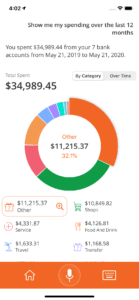
The Virtual Banking Assistant will be available to almost all Fiserv digital banking clients across 100 countries. Charges are based on a “per active user” fee. The company declined to give a ballpark figure for this fee, adding that it will “vary by size, fit and complexity” of the financial institutions, customers and types of integrations.
Smaller financial institutions can use the tool to digitize their platforms, and mid-sized institutions can use it to create their own user experience according to their customers’ needs.
“The licensed platform actually gives financial institutions the capability to execute a roadmap of their own,” Jandris said. Early feedback from existing clients has been positive, he noted.
According to Tiffani Montez, senior analyst at Aite Group, chatbots will need to continue building out their functionality to see long-term success.
“The key point to keeping that adoption is continuing to evolve the experience,” Montez recently told Bank Innovation, adding that companies developing chatbot technology will need to iterate to avoid going stagnant.