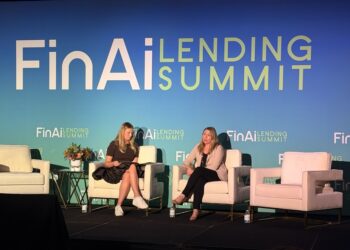
Sonata Bank is emphasizing AI practicality and selective vendor partnerships to propel its “digital-first” strategy as a community bank.
Brentwood, Tenn.-based Sonata prioritizes AI applications that can immediately reduce cycle time for laborious and repetitive processes, Chief Innovation Officer Will Rhoads told FinAi News, including:
- Fraud detection;
- Text summarization;
- KYC document indexing;
- Customer service; and
- Underwriting support.
The company’s technology partners include Jack Henry, iDENTIFY and Praxent, Rhoads said.
Sonata was founded as Sebree Deposit Bank in 1890 and rebranded in 2022. The $250 million bank’s AI strategy includes a deeper focus on retrievals rather than “free-form generation,” Rhoads said.
“Anything that is customer-impacting or compliance-impacting, we have to prioritize systems that are going to cite our internal data, whether that’s policies, procedures, product docs, customer data.”
— Will Rhoads, CIO, Sonata Bank
“And we need to constrain the output because the type of work that we do. We cannot work in an environment where we’re dealing with a large amount of hallucinations,” he said.
Grounding and RAG
Combining grounding and retrieval-augmented generation (RAG) is one way to prevent hallucinations and compliance missteps, which can be especially costly for smaller banks, Rhoads said.

Grounding refers to the process of anchoring an LLM with clean, verifiable data. RAG then provides a framework by ensuring that the AI model retrieves the most relevant data for each query, generating more grounded and accurate responses.
Maintaining a human in the loop is also crucial despite advancing capabilities of AI agents, Rhoads said.
“That applies to everything from customer communication to internal memos, underwriting support and operational decisions,” he said. “But we have to reduce risk while still capturing that time savings.”
To achieve this, Sonata prioritizes AI-native or built-in workflows, rather than bolting AI onto existing systems, Rhoads said.
“The biggest gains for us come when the AI sits inside of the system — whether that’s ticketing, case management, CRM knowledge bases — and we’re triggering it at the right time,” he said.
AI in community banking
Of roughly 200 community banks surveyed by financial services firm BNY during the summer of 2025, 25% said investing in AI and automation for operational efficiency is a top priority in 2026, with 31% of these banks planning to invest most heavily in this area.
Top priority investments for community banks in 2026

Community banks — those with less than $10 billion in assets — face unique challenges in AI adoption, including limited staff expertise, budgetary constraints and increased vulnerability to compliance penalties, according to cloud-based banking platform nCino.
Examples of AI being deployed at community banks include:
- MUSFCU using it for internal and external chatbots;
- Mid-South Community FCU using its for fraud dispute management; and
- Frost Bank providing AI tech to customer representatives to boost efficiency.
A strong data foundation is crucial for successful AI deployment at smaller institutions, Rhoads said.
“Clean metadata, consistent taxonomy and unified views across systems so the AI can act with reliable context — that is the real challenge, I think, for most organizations our size,” he said.
Community and regional banks should also seek vendor partners that own their core technology stack because there are fewer risks and complexities in contract agreements, Rhoads said.
“If you’re just placing a wrapper app on top of that core technology, there are pretty good odds that one of those large companies that are building these giant models is going to bring that technology or that innovation into their own stack,” he said.
In addition, it’s important for smaller banks to provide AI training across their organizations when implementing new tools, Rhoads said.
Register here for the inaugural FinAi Banking Summit, taking place March 2-3 in Denver. View the full event agenda here.