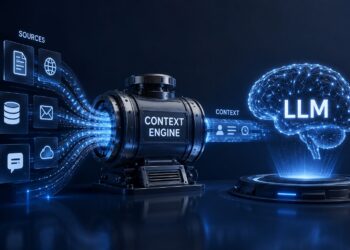
The intersection of quantum computing and AI signals an inflection point for the financial services industry.
The global market for quantum AI — the merger of the two technologies — is projected to hit nearly $7 billion by 2034, growing 34.8% annually from $473.5 million in 2025, according to market intelligence firm Precedence Research.
Quantum computing, which uses qubits (quantum bits) to solve complex problems faster than classical computing, is gaining traction in financial services due to its ability to process larger data sets, enhance AI models and accelerate processes, according to previous FinAi News reporting.
FIs should be thinking about quantum computing “alongside their AI strategies,” rather than in complete unison, because the technologies are vastly different, Katanya Kuntz, founder and chief executive of Qubo Consulting, told FinAi News. Qubo provides quantum-computing consulting to businesses, including FIs and fintechs.
“It’s not like quantum computing is going to replace everything that you’re doing now with your classical AI computing,” she said. “It’s just going to be a hybrid solution, where you do most things on your AI platform and then you just outsource those really hard problems, those huge data sets, to your quantum system.”
Mike Stawchansky, chief technology officer at fintech Finastra, told FinAi News that for the technologies to work in harmony, FIs should view AI as “your natural language pathway into utilizing computing, and then your quantum is just the raw horsepower.”
“You’ve got your steering wheel in the AI, and then you’ve got the engine in the quantum.”
— Mike Stawchansky, CTO, Finastra
“You can have a really good one and not the other, and you can get where you want to go, but [FIs] have to think about them as a synergy,” he said. “Raw power and the ability to direct that raw power is kind of how I’m thinking of these two together.”
Hybrid solutions
While still in its nascent stages, quantum AI uses are taking shape across financial services. For example, some FIs are using hybrid solutions for portfolio optimization, Kuntz said, citing a study that included European banks BBVA and Bankia.
“It took basically two minutes to do a massive data-set computation optimization, where the classical computer would have taken a day and a half,” she said.
Risk modeling and market forecasting also present opportunities for hybrid solutions, she said.
Reflecting this, IBM and financial services firm HSBC partnered on a hybrid solution for algorithmic bond trading, yielding up to 34% improvements in predicting which trades would be completed at a quoted price, according to a Sept. 25 HSBC release.
In addition, AI can help with the design of quantum circuits, Kuntz said.
Next steps for FIs
As more use cases for hybrid solutions emerge, FIs should devote 5% of their current AI budgets to quantum computing so that they’re prepared to deploy the technologies in harmony, Kuntz said.
“Whether that’s taking a course, going to a lecture or engaging with one of these quantum companies directly, it’s definitely worth it because you’ll start to be able to integrate these algorithms side by side with your AI,” she said.
FIs also must ensure that their data is aligned and guardrails are in place with their AI systems before introducing quantum, Finastra’s Stawchansky said.
“Quantum is just going to let you get through that [data] faster,” he said. “The challenge is, if you don’t have your processes right, you’re going to get through it faster incorrectly.”
Register here for the inaugural FinAi Banking Summit, taking place March 2-3 in Denver. View the full event agenda here.