Banks are honing their AI training strategies as they work to stay ahead of the curve and overcome challenges tied to organizational resistance.
Fifty percent of more than 1,500 financial services leaders cited a talent shortage as their top barrier to adopting AI, according to a Feb. 10 report by fintech Finastra.
The biggest hurdles to AI adoption are often cultural, not technological, so FIs must recognize that “solution design has to start with empathy,” Kristin Milchanowski, chief AI and data officer at BMO, told FinAi News.
“People resist AI when they feel threatened, confused or excluded from the change. We anchor our approach in a simple principle: Innovation without empathy is empty.”
— Kristin Milchanowski, chief AI officer, BMO

To execute AI training at scale, the $1.5 trillion bank strives to ensure that every employee understands “what AI is, how it can be used and where the boundaries are,” Milchanowski said, noting that this reduces fear and builds baseline confidence.
“From there, we deliver a line of business-specific training supported by a network of embedded AI leads who translate AI into real day-to-day workflows,” she said. “That makes adoption practical and relevant to each role. Executive education is also critical. Senior leaders need to model usage and signal that AI is here to support people, not replace them.”
Pairing enablement with clear guardrails, strong governance and human oversight also makes employees feel safe experimenting with and using AI tools, she said.
Experimentation breeds talent
Following basic AI training, bank employees should have access to explore and experiment with technology.
Nashville-based Thread Bank, for example, teaches employees how to build AI agents and creates internal user groups that share results from certain AI projects, making people more comfortable using AI for everyday tasks, Chief Digital Officer Marty Miracle told FinAi News.
“As you embrace AI, it allows you as the individual employee to go focus on things that are more valuable to the organization and probably more interesting to you. Our goal is to get you out of the mundane. Once that becomes cultural, you’ll see massive use of the tools that we’ve put out there.”
— Marty Miracle, chief digital officer, Thread Bank
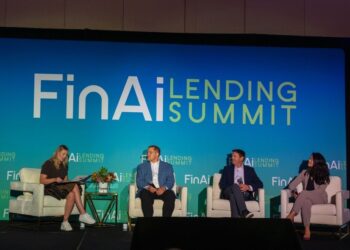
Upskilling employees as soon as possible and creating a “sandbox environment” for them to experiment positions FIs to develop an effective talent strategy, Prageeth Sandakalum, former vice president and principal product manager at U.S. Bank, said at the recent FinAi Banking Summit 2026 in Denver.
Empowering employees to experiment helps build a strong AI culture because they will know that a certain solution is designed to streamline workflows, not replace them, David Becker, chief executive at Fishers, Ind.-based First Internet Bank, told FinAi News.
AI “will make you a better employee,” he said. “They control their own destiny. We’re giving them the tools. … If you want to work with it and learn it, there’s a hell of a future for you.”