Top 20 banks struggle with mobile account opening

Not everyone can open a bank account on their phone just yet.
According to recent data from the biometric technology firm iProov, only 65% of the banks in the study offered account opening through a mobile app. The report examined “20 of the largest retail banks in the U.S. by asset size.”
“Customers want some sort of ‘ceremony’ as they onboard — a bank with no security at all will not inspire confidence,” the report read. “But too many hoops to jump through, and the experience becomes frustrating, which means the customer will take their business elsewhere — and the choice of alternatives is far greater online.”
Banks have been striving for years to make account opening as seamless as possible, but know-your-customer and anti-money laundering hurdles create a balancing act between security and convenience. The iProov data demonstrates many banks still haven’t figured out how to make the process completely mobile.
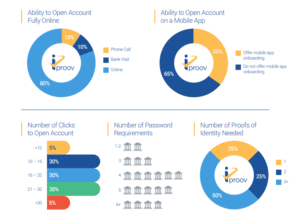
Although not all banks offer fully mobile account opening, online account opening is a different story, with 80% of the banks in the study allowing customers to open an account online. As for how long it takes to open an account, 45% of banks took two days or more. Some banks, according to iProov, took this long because they required trial deposits, while others required customers to call or visit a branch. Only 5% of the banks took less than 10 clicks to open an account, and half needed three or more forms of identity.
Biometrics and facial recognition are becoming an increasingly important security tool for banks. “Facial recognition and other biometrics provide a high level of security at the onset of an interaction, and minimizes the need to interrupt the customer in the middle of a transaction by asking for additional authentication,” Mike Slaugh, executive director of fraud prevention at USAA, recently told Bank Innovation.
London-based iProov, which was founded in 2012, provides biometric authentication technology for clients such as ING, the U.S. Department of Homeland Security, the U.K. National Health Service and Rabobank. The research took place in August and looked specifically at the online account-opening experience, according to the report.
“There is still work to be done in automating the processes involved in verifying identity,” the report read.