BNY is tapping into the BaaS market by combining traditional financial services with modern technology and strategic partnerships.
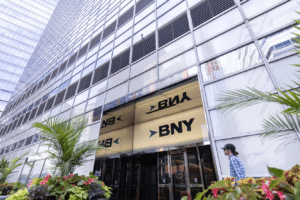
With $30 billion in assets under management, BNY is using APIs, real-time payments and enhanced risk management tools to scale services and ensure compliance, Carl Slabicki, executive platform owner of treasury services at BNY, told Bank Automation News.
“It’s really solution-selling,” Slabicki said. “That is the mix of that entire working capital structure, right? How do we safeguard deposits and optimize yield on investment? How do we maximize working capital efficiency through good real-time, 24/7 services like instant payments?”
Cross-industry collaboration
For BaaS partnerships, BNY typically targets large and regional banks, credit unions, broker-dealers and established fintechs that have institutional clients or a strong service provider base, Slabicki said.
“We support a wide range of banks and nonbank financial services providers that make up our client base,” he said, without disclosing names.

Key aspects of BNY’s approach to BaaS include:
- Expanding the value chain by exploring services beyond deposits, such as risk and fraud monitoring, reporting capabilities, payment processing and investment solutions; and
- Collaborating with regulators to ensure compliance and strong know-your-customer, anti-money laundering monitoring and ledger-keeping standards.
Value potential
The global BaaS market is projected to climb to $8.5 billion by 2032, up from $1.3 billion in 2024, according to a March 21 report by market research firm P&S Intelligence.
While this market is lucrative, it does require a long-term strategy for FIs to fully capitalize on it, Bridgit Chayt, executive vice president and head of commercial payments and treasury management at the $213 billion Fifth Third Bank, said during a panel at the recent CBA Live 2025.
Fifth Third provides BaaS through its API-powered embedded payments platform, Newline, launched in 2023, according to the bank.
Maximizing gains
Brian Graham, co-founder and partner of advisory and investment firm Klaros Group, agreed with Chayt, saying that to be successful in BaaS, FIs must have strategies to make money while avoiding regulatory noncompliance.
“It’s really simple to say [this], but it’s really hard to achieve,” he said.
“On the money-making side, you’ve got to decide: Are you going to drive value through debt interchange? Are you going to drive value through fees paid by the end customer? Through the financial assets and liabilities, deposits that are created and whatever value is attributable there?” he said.
Old Missouri Bank, for example, generates value through deposits. The Springfield, Mo.-based bank is on pace to gain $500 million through BaaS in 2025 after rolling out BaaS in 2022, Steve Bishop, executive vice president and chief innovation officer, said during the recent Bank Automation Summit 2025.
OMB’s fintech partners include cash management fintech Crescent Finance Global and SMB banking provider Meow.

Other FIs exploring BaaS include:
- $1.7 trillion Citi;
- $5.4 billion digital bank Green Dot; and
- $2.7 billion First Fidelity Bank.
Conquering compliance
Meeting regulatory standards is also more complex than it may seem, Graham said, echoing BNY’s Slabicki.
Every part of the fragmented value chain must function efficiently, with the bank maintaining oversight and control, Graham said.
“It’s hard to do and requires a lot of technology,” he said.
Register here for the upcoming Bank Automation News webinar “Emerging fintechs: New technologies you need to know now” on Tuesday, April 8, at 11 a.m. EST.