Listen: Large banks partner to launch new digital wallet
JPMorgan Chase, Wells Fargo among FIs teaming on payment technology

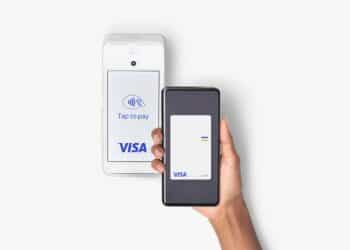
Bank of America, JPMorgan Chase and Wells Fargo are among seven banks teaming to launch a digital wallet in the second half of the year to rival Apple Pay.
As the new digital wallet is rolled out in North America, customer experience should be at the forefront, as use of digital wallets is already high. Forty-three percent of North Americans are using digital wallets, Cecilia Tamez, chief strategy officer at cross-border payment platform Dandelion, tells Bank Automation News in this episode of “The Buzz” podcast.
“Banks are really smart, what’s kept them back is that they’re risk-averse, and that change is difficult,” Tamez said. “There is a lot of transformation that in order to create a great customer experience, banks really need to create a technology platform, they need to create automation in their processes, they need to leverage technology like machine learning and AI to be able to manage that kind of interest in real time.”
However, the opportunity shouldn’t stop at the digital wallet launch, Dan Poswolsky, head of product for fintech Curve U.S., previously told BAN. “Unless [the banks] use new technology to create a better experience, it’s going to be like any other [wallet] in this graveyard of digital wallets.”
Listen as Tamez discusses how this new wallet can help provide financial inclusion in underbanked areas, what challenges may lie ahead with the launch of this new product, and why banks decided now was the time to develop their own version of the already widely used payment technology.
Bank Automation Summit US 2023, March 2-3 in Charlotte, is a crucial event on automation technology in banking and will feature a fireside chat with Brinda Bhattacharjee of Goldman Sachs & Co. Register here. Learn more and register for Bank Automation Summit US 2023.
Subscribe to The Buzz Podcast on iTunes, Spotify, Google podcasts, or download the episode.
The following is a transcript generated by AI technology that has been lightly edited but still contains errors.
Hello and welcome to The Buzz, a Bank Automation News podcast. My name is Brian Stone, and I’m the Associate Editor at Bank Automation News. Joining me today is Cecilia Tamez. Chief Strategy Officer at Dandelion. Cecilia discusses the new digital wallet being launched by tier one banks such as Wells Fargo and JP Morgan, why it can help with financial inclusion and underbanked areas. And the ways the new wallet is significant for both banks and their customers. I think what’s interesting about it is really the moment that is signifies digital wallets are not new people have digital wallets, we have had Apple Pay and Google Pay, people use PayPal. So it’s not so much that this is a new technology. I think what it signifies is that banks have realized that this is an important component of the payments ecosystem, that people want to have a digital wallet, and that they realized that it’s hit enough of a market share that there is a risk that is going to begin to disintermediate their relationship with customers. So really the the really key aspect of it is understanding that PayPal is taking up 30, you know, 35% of North American users use PayPal, and 43% of North American users use a digital wallet of some kind, sometimes, and often several digital wallets, it’s not an expensive piece. So I think banks are realizing that there is opportunity there. And that there is a risk there that they need to participate and bring to market this this piece of technology.So I do understand they’re trying to sort of break into that space and maybe cut into, you know, Apple or Google’s, you know, market share, I guess a little bit, is there anything else behind the launch of this? Or are they just trying to kind of stake their claim in the in the digital wallet space,
Cecilia Tamez 2:04
I think historically banks have somewhat dismiss these wallets because there’s still a card in the mix. And usually they issue the card to customers. So they’re still making revenue from the card activity. They do have to pay a small amount of money, for example, with Apple Pay, they pay us a very small percentage per transaction. I think really, this is more about the relationship that they have with customers. And also the way that big tech is advancing strategically towards the banking services, I think what they’ve realized is that they need to protect that relationship that they have with customers, before they become disintermediated. So there’s a couple of things at play here. One is Apple Pay, for example, is coming out with a buy now pay pay later service. And that starts to impact the credit the credit relationship that they have with customers. There’s also other financial services that big tech companies are looking to provide. So as those big tech companies start moving into the banking space, bank, banks are realizing that they want to strengthen that relationship that they have with customers, I think, especially as a generational thing as well, they want to attract younger customers to continue to use banks, as opposed to them moving into the big tech world and reducing that relationship they have. The other side of it is that mobile wallets also offer some additional security aspects that can reduce that can reduce fraud. So there has been an increase in in fraudulent card views in the last few years, especially as the use of E commerce has increased with COVID, resulting in people buying more online and more virtually, that’s created some new risks that are causing banks a lot of money. And they’re realizing that this mobile wallet if they can use biometrics, leverage other security aspects of a mobile wallet that’s connected to a device, then they can reduce some of that risk and, and provide a better service for their customers.
Brian Stone 4:11
One other thing that I wanted to ask about was financial inclusion. Can you talk a little bit about how this will impact that and maybe cut down on or provide rather banking services to areas that are historically I guess, underbanked?
Cecilia Tamez 4:28
Well, it’s interesting because financial inclusion in emerging markets is quite different than it is in established markets. So in the US, for example, about 81% of people are fully backed, which means that that’s quite a large percentage of people who are underbanked. And that means that they’re using alternative services to meet their banking needs. So that’s 20% of people, the bank of a market that banks aren’t reaching Well, and, but there is one There’s a gap. So in emerging markets, let’s take India, for example, who’s probably the best, at most, most advanced market for digital payments. And what they will happen there is that the government took an entire system, they leveraged a digital ID for all of their citizens, that’s really key. Because if you don’t have a digital identity, then you can’t participate in the digital economy. Then they created UPI, which is a central national system of payments, that makes payments ubiquitous. And that’s really great, because it allows two sides of it cause customers to be able to easily make payments with a mobile wallet, but also allows merchants who sometimes don’t have the greatest internet connection in some rural regions, allow them to, to charge with just a QR code. So you can print a QR code, and somebody can make a payment, it creates financial inclusion, not just for consumers, but also for merchants as well. And then of course, there’s the data layer as well. So in this case, these are the seven banks coming together together to create a digital wallet. What’s missing there is if these banks don’t have an existing relationship with customers, there’s still a step that needs to happen in order to drive the financial inclusion that some of these emerging markets are delivering. So that banks would need to create an easier or better or more accessible way for people to become bank online, as opposed to the traditional banking system. So it could be that the digital wallet would enable you to create that account remotely. And that would allow you to have more financial inclusion. But banks would have to still change their behavior in order to drive that further inclusion in the market,
Brian Stone 6:41
when it comes to just setting up a product like this, what is what is going to be one of the most and I know what you just said about sort of trying to get that in those emerging markets. But what’s the biggest challenge of undertaking a process like this and launching a product like a digital wallet,
Unknown Speaker 7:00
I think the most important component to creating a successful digital wallet is really about the customer experience. There’s a lot of banks, historically that have not had a great reputation for customer experience. And that’s why a lot of fintechs have made inroads to create to create those relationships with consumers that haven’t been there with their banks. I think banks are really smart, what’s kept them back is that they’re risk averse. And that change is difficult. And they’re behemoth, they’re really big. So in order to be able to deliver a product like this, they need to deliver a significant technology transformation that historically they have been slow to move. But they’re realized now that they have to make that transformation. So leveraging what we call coopetition, which is partnering with fintechs, as opposed to competing with them so that they can get the best of all worlds for their consumers, I think is really important. Creating a great customer experience, creating a level of new way of operating is really important. So the added benefit of something like a mobile wallet is the instant payments is there going to be real time, that requires a lot of the processes connected to payments to become real time as well. So not just the payment moving from A to B, but also risk management, compliance, regulatory, all of these things that normally historically have taken days to process in a bank, when I’m paying something online, suddenly has to be compressed in a second. And so there is a lot of transformation that in order to create a great customer experience, banks really need to create a technology platform, they need to create automation in their processes, they need to leverage technology like machine learning and AI to be able to manage that kind of rest in real time. So there’s a lot that goes into creating this interface for customers. Ultimately, it’s a foundational infrastructure that needs to follow in order to make it really successful.
Brian Stone 9:08
As far as launching this for these financial institutions. What is the biggest potential benefit they’ll see from it other than maybe, you know, breaking into a market where they didn’t previously have those relationships that you kind of talked about? I think,
Unknown Speaker 9:28
I think, well, first of all, we have to determine whether this is going to be successful or not. Because we live in a world right now, where a lot of consumers have mobile wallets already, they already have an established behavior. So in order for banks to succeed in this endeavor, they really need to think about what makes them different and what gives them a unique value proposition compared to what customers already have. So one of the benefits that banks have, or one of the advantages that banks have is that they have those existing relationships with customers and they’re really good at things like risk. They’re really Good onboarding, he KYC, all of those things actually KYC. But they’re really, they really have a lot of advantages in order to make this successful. But the question is, what are they going to do to make this be something that is adopted? So one is they have to make it attractive for merchants. Because if nobody’s accepting this mobile wallet as a payment method, it nobody’s going to have a mobile wallet to use. So how are they making this attractive for merchants to adopt as payment methods? And what are they doing for consumers today? That they could do differently with this mobile wallet? What are the opportunities? I think some of the opportunities are things like more convenient, if more merchants are accepting it, then they can they can navigate the world of payments a lot easier. Does it give them any cost benefits, you know, more and more consumers are looking for payment methods that don’t carry interest rates. Because, you know, we’re moving into recessionary times, people are really mindful of the money that they’re spending. But then the additional benefits that they could potentially have is, the US tends to be a little bit behind when it comes to the payment architecture of the country. So making a payment, they’re having to move into services like Venmo, in order to make peer to peer payments, but there’s always friction there, because they’re not connected necessarily immediately. You have to take steps to sign up and and to get money in there. If it’s if the bank is offering that service, it makes it a lot more seamless for a consumer to use it. And then in addition to that, what are some of the additional new things they could leverage with this? So could they create better CVB payments for paying bills, for example, or for paying rent for consumers? Could they create a better service for cross border payments. So one of the things that is really important to consider is that this is a mobile wallet that’s been created, probably from for a domestic purpose. But there’s a huge portion of the population that needs to make cross border payments, to other businesses to other consumers. wallet to Wallet payments to emerging markets is really important. Even to establish markets the use of of digital wallets is is really key. So right now banks are used to using bank to bank payments. Are they creating a more interoperable system that allows people to pay other wallets, other bank accounts, maybe send money for somebody to pick up cash somewhere else? So there’s a lot of opportunity for banks to consider partnering with, with technology partners fintechs that would allow them to create augment the services they offer today through this mobile wallet.
Brian Stone 12:53
You’ve been listening to the buzz, a bank automation news podcast, please follow us on Twitter and LinkedIn. And as a reminder, you can rate this podcast on your platform of choice, be sure to visit us at Bank automation news.com
Bank of America, JPMorgan Chase and Wells Fargo are among seven banks teaming to launch a digital wallet in the second half of the year to rival Apple Pay.
As the new digital wallet is rolled out in North America, customer experience should be at the forefront, as use of digital wallets is already high. Forty-three percent of North Americans are using digital wallets, Cecilia Tamez, chief strategy officer at cross-border payment platform Dandelion, tells Bank Automation News in this episode of “The Buzz” podcast.
“Banks are really smart, what’s kept them back is that they’re risk-averse, and that change is difficult,” Tamez said. “There is a lot of transformation that in order to create a great customer experience, banks really need to create a technology platform, they need to create automation in their processes, they need to leverage technology like machine learning and AI to be able to manage that kind of interest in real time.”
However, the opportunity shouldn’t stop at the digital wallet launch, Dan Poswolsky, head of product for fintech Curve U.S., previously told BAN. “Unless [the banks] use new technology to create a better experience, it’s going to be like any other [wallet] in this graveyard of digital wallets.”
Listen as Tamez discusses how this new wallet can help provide financial inclusion in underbanked areas, what challenges may lie ahead with the launch of this new product, and why banks decided now was the time to develop their own version of the already widely used payment technology.
Bank Automation Summit US 2023, March 2-3 in Charlotte, is a crucial event on automation technology in banking and will feature a fireside chat with Brinda Bhattacharjee of Goldman Sachs & Co. Register here. Learn more and register for Bank Automation Summit US 2023.
Subscribe to The Buzz Podcast on iTunes, Spotify, Google podcasts, or download the episode.
The following is a transcript generated by AI technology that has been lightly edited but still contains errors.
Hello and welcome to The Buzz, a Bank Automation News podcast. My name is Brian Stone, and I’m the Associate Editor at Bank Automation News. Joining me today is Cecilia Tamez. Chief Strategy Officer at Dandelion. Cecilia discusses the new digital wallet being launched by tier one banks such as Wells Fargo and JP Morgan, why it can help with financial inclusion and underbanked areas. And the ways the new wallet is significant for both banks and their customers. I think what’s interesting about it is really the moment that is signifies digital wallets are not new people have digital wallets, we have had Apple Pay and Google Pay, people use PayPal. So it’s not so much that this is a new technology. I think what it signifies is that banks have realized that this is an important component of the payments ecosystem, that people want to have a digital wallet, and that they realized that it’s hit enough of a market share that there is a risk that is going to begin to disintermediate their relationship with customers. So really the the really key aspect of it is understanding that PayPal is taking up 30, you know, 35% of North American users use PayPal, and 43% of North American users use a digital wallet of some kind, sometimes, and often several digital wallets, it’s not an expensive piece. So I think banks are realizing that there is opportunity there. And that there is a risk there that they need to participate and bring to market this this piece of technology.So I do understand they’re trying to sort of break into that space and maybe cut into, you know, Apple or Google’s, you know, market share, I guess a little bit, is there anything else behind the launch of this? Or are they just trying to kind of stake their claim in the in the digital wallet space,
Cecilia Tamez 2:04
I think historically banks have somewhat dismiss these wallets because there’s still a card in the mix. And usually they issue the card to customers. So they’re still making revenue from the card activity. They do have to pay a small amount of money, for example, with Apple Pay, they pay us a very small percentage per transaction. I think really, this is more about the relationship that they have with customers. And also the way that big tech is advancing strategically towards the banking services, I think what they’ve realized is that they need to protect that relationship that they have with customers, before they become disintermediated. So there’s a couple of things at play here. One is Apple Pay, for example, is coming out with a buy now pay pay later service. And that starts to impact the credit the credit relationship that they have with customers. There’s also other financial services that big tech companies are looking to provide. So as those big tech companies start moving into the banking space, bank, banks are realizing that they want to strengthen that relationship that they have with customers, I think, especially as a generational thing as well, they want to attract younger customers to continue to use banks, as opposed to them moving into the big tech world and reducing that relationship they have. The other side of it is that mobile wallets also offer some additional security aspects that can reduce that can reduce fraud. So there has been an increase in in fraudulent card views in the last few years, especially as the use of E commerce has increased with COVID, resulting in people buying more online and more virtually, that’s created some new risks that are causing banks a lot of money. And they’re realizing that this mobile wallet if they can use biometrics, leverage other security aspects of a mobile wallet that’s connected to a device, then they can reduce some of that risk and, and provide a better service for their customers.
Brian Stone 4:11
One other thing that I wanted to ask about was financial inclusion. Can you talk a little bit about how this will impact that and maybe cut down on or provide rather banking services to areas that are historically I guess, underbanked?
Cecilia Tamez 4:28
Well, it’s interesting because financial inclusion in emerging markets is quite different than it is in established markets. So in the US, for example, about 81% of people are fully backed, which means that that’s quite a large percentage of people who are underbanked. And that means that they’re using alternative services to meet their banking needs. So that’s 20% of people, the bank of a market that banks aren’t reaching Well, and, but there is one There’s a gap. So in emerging markets, let’s take India, for example, who’s probably the best, at most, most advanced market for digital payments. And what they will happen there is that the government took an entire system, they leveraged a digital ID for all of their citizens, that’s really key. Because if you don’t have a digital identity, then you can’t participate in the digital economy. Then they created UPI, which is a central national system of payments, that makes payments ubiquitous. And that’s really great, because it allows two sides of it cause customers to be able to easily make payments with a mobile wallet, but also allows merchants who sometimes don’t have the greatest internet connection in some rural regions, allow them to, to charge with just a QR code. So you can print a QR code, and somebody can make a payment, it creates financial inclusion, not just for consumers, but also for merchants as well. And then of course, there’s the data layer as well. So in this case, these are the seven banks coming together together to create a digital wallet. What’s missing there is if these banks don’t have an existing relationship with customers, there’s still a step that needs to happen in order to drive the financial inclusion that some of these emerging markets are delivering. So that banks would need to create an easier or better or more accessible way for people to become bank online, as opposed to the traditional banking system. So it could be that the digital wallet would enable you to create that account remotely. And that would allow you to have more financial inclusion. But banks would have to still change their behavior in order to drive that further inclusion in the market,
Brian Stone 6:41
when it comes to just setting up a product like this, what is what is going to be one of the most and I know what you just said about sort of trying to get that in those emerging markets. But what’s the biggest challenge of undertaking a process like this and launching a product like a digital wallet,
Unknown Speaker 7:00
I think the most important component to creating a successful digital wallet is really about the customer experience. There’s a lot of banks, historically that have not had a great reputation for customer experience. And that’s why a lot of fintechs have made inroads to create to create those relationships with consumers that haven’t been there with their banks. I think banks are really smart, what’s kept them back is that they’re risk averse. And that change is difficult. And they’re behemoth, they’re really big. So in order to be able to deliver a product like this, they need to deliver a significant technology transformation that historically they have been slow to move. But they’re realized now that they have to make that transformation. So leveraging what we call coopetition, which is partnering with fintechs, as opposed to competing with them so that they can get the best of all worlds for their consumers, I think is really important. Creating a great customer experience, creating a level of new way of operating is really important. So the added benefit of something like a mobile wallet is the instant payments is there going to be real time, that requires a lot of the processes connected to payments to become real time as well. So not just the payment moving from A to B, but also risk management, compliance, regulatory, all of these things that normally historically have taken days to process in a bank, when I’m paying something online, suddenly has to be compressed in a second. And so there is a lot of transformation that in order to create a great customer experience, banks really need to create a technology platform, they need to create automation in their processes, they need to leverage technology like machine learning and AI to be able to manage that kind of rest in real time. So there’s a lot that goes into creating this interface for customers. Ultimately, it’s a foundational infrastructure that needs to follow in order to make it really successful.
Brian Stone 9:08
As far as launching this for these financial institutions. What is the biggest potential benefit they’ll see from it other than maybe, you know, breaking into a market where they didn’t previously have those relationships that you kind of talked about? I think,
Unknown Speaker 9:28
I think, well, first of all, we have to determine whether this is going to be successful or not. Because we live in a world right now, where a lot of consumers have mobile wallets already, they already have an established behavior. So in order for banks to succeed in this endeavor, they really need to think about what makes them different and what gives them a unique value proposition compared to what customers already have. So one of the benefits that banks have, or one of the advantages that banks have is that they have those existing relationships with customers and they’re really good at things like risk. They’re really Good onboarding, he KYC, all of those things actually KYC. But they’re really, they really have a lot of advantages in order to make this successful. But the question is, what are they going to do to make this be something that is adopted? So one is they have to make it attractive for merchants. Because if nobody’s accepting this mobile wallet as a payment method, it nobody’s going to have a mobile wallet to use. So how are they making this attractive for merchants to adopt as payment methods? And what are they doing for consumers today? That they could do differently with this mobile wallet? What are the opportunities? I think some of the opportunities are things like more convenient, if more merchants are accepting it, then they can they can navigate the world of payments a lot easier. Does it give them any cost benefits, you know, more and more consumers are looking for payment methods that don’t carry interest rates. Because, you know, we’re moving into recessionary times, people are really mindful of the money that they’re spending. But then the additional benefits that they could potentially have is, the US tends to be a little bit behind when it comes to the payment architecture of the country. So making a payment, they’re having to move into services like Venmo, in order to make peer to peer payments, but there’s always friction there, because they’re not connected necessarily immediately. You have to take steps to sign up and and to get money in there. If it’s if the bank is offering that service, it makes it a lot more seamless for a consumer to use it. And then in addition to that, what are some of the additional new things they could leverage with this? So could they create better CVB payments for paying bills, for example, or for paying rent for consumers? Could they create a better service for cross border payments. So one of the things that is really important to consider is that this is a mobile wallet that’s been created, probably from for a domestic purpose. But there’s a huge portion of the population that needs to make cross border payments, to other businesses to other consumers. wallet to Wallet payments to emerging markets is really important. Even to establish markets the use of of digital wallets is is really key. So right now banks are used to using bank to bank payments. Are they creating a more interoperable system that allows people to pay other wallets, other bank accounts, maybe send money for somebody to pick up cash somewhere else? So there’s a lot of opportunity for banks to consider partnering with, with technology partners fintechs that would allow them to create augment the services they offer today through this mobile wallet.
Brian Stone 12:53
You’ve been listening to the buzz, a bank automation news podcast, please follow us on Twitter and LinkedIn. And as a reminder, you can rate this podcast on your platform of choice, be sure to visit us at Bank automation news.com