Southwest credit union eyes Gen Z with tailored app

As challenger banks target Generation Z, Dallas-based Southwest Airlines Credit Union is looking to members’ children to promote digital financial literacy. In July, it rolled out the Ace Jr. app, which lets parents set up accounts for their kids and teach them personal finance basics.
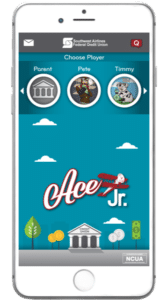
Since it launched the app, the credit union has seen the number of new youth accounts double. The app connects to a child’s account at the credit union. Parents can assign chores, deposit money into their children’s accounts and monitor transactions. Like other mobile banking apps, children are able to see their account balances, but unlike startup-developed apps like Current or Kard, they can’t use the money in their accounts.
Despite the fact that children can’t use the funds to make payments, it’s a gamification play, according to Taylor Rogers, senior marketing specialist at SouthWest Airlines Federal Credit Union (SWACU). She explained that children learn about personal finance through the app by playing games where they earn points and learn about cash, checks and other banking-related tasks. Children also can take short quizzes and gain badges for answering questions correctly.
The app was developed by HTMA, a Michigan-based fintech company that serves banks and credit unions. HTMA has developed other personal finance apps like Banker Jr., Member Jr. and Plinqit, an app that helps banks grow their deposit bases via customer savings amounts transferred to the app.
“It’s a safe place to teach them,” Rogers said. “As they get older, they’re going to recognize this is a debit and this is a credit. It’s a safe location where they can’t really physically move anything or get themselves into trouble.”
See also: How savings app Plinqit wants to help banks
Beyond being an educational resource, the app introduces members’ children to SWACU’s other digital products and services that they could access as an adult. Kathleen Craig, founder and CEO of HTMA, said introducing children to banking and financial responsibility through a transitional app will ensure SWACU’s continued growth and cement relationships with members.
Tiffani Montez, senior analyst at Aite Group, agreed, noting that Ace Jr. is part of a bigger trend where financial institutions increasingly are turning to fintech companies to offer customers holistic financial wellness tools. “Given that [children] use digital devices, it makes more sense for them to begin to learn how to manage their finances digitally,” she said.
Like other youth-focused financial services, including Greenlight, a customized prepaid debit card and banking mobile app for children promotes the brand to potential customers early in life. “Products and services are commoditized; it’s really the experience that becomes your differentiator,” Montez said. “They’re demonstrating to someone that they have the technology and the experience to help them achieve whatever financial success that they want, whether they are 15 or they are 55.”
Bank Innovation Build, on Nov. 6-7 in Atlanta, helps attendees understand how to “do” innovation better. It is designed to offer best practices, to guide the innovation professional to better results. Register here.