BofA, Chase, TD Bank and BMO woo SMBs with new accounting integrations

Big banks are making their push to gain small business clients. Although headlines this year focused on banks’ actions during the Paycheck Protection Program, many of the biggest names in finance are also integrating accounting software into online banking.

“Most small business leaders didn’t get into whatever it is that they do because they were desperate to be a financial professional,” said Rick Burke, head of corporate products and services at TD Bank. “It’s the thing they least want to do. It takes up a bunch of time and ends up eating into their opportunities for growth.”
By automatically transferring transactional data from small businesses’ bank accounts to accounting software like QuickBooks and Autobooks, banks can eliminate manual data entry and create a better client experience. It also keeps banks’ clients engaged and allows banks to own a deeper relationship with small businesses. It’s a technique used by large incumbents like Bank of America, JPMorgan Chase, TD Bank and Bank of Montreal.
TD Bank, the Cherry Hill, N.J.-based subsidiary of the Canadian megabank TD, launched TD Online Accounting in August. The bank developed the new accounting features through a partnership with Autobooks, a Detroit-based startup that white labels its online accounting software to banks. Many small businesses use digital accounting software like QuickBooks, Xero and Sage to manage their finances. By partnering with Autobooks, Burke said the bank can keep banking and accounting under one roof.
With TD Online Accounting, clients can send invoices, create balance sheets and income statements, handle bookkeeping, and see insights on their businesses’ health. Burke said data is transferred between banking and accounting in real time, eliminating the need to manually transfer information. The data is transferred through APIs, and clients can toggle between accounting and banking online. Burke said the bank has a “few hundred” clients using TD Online Accounting and expects more to sign up with the announced rollout.
Alenka Grealish, senior analyst of corporate banking at Celent, previously told Bank Innovation that insights can be a helpful tool if implemented correctly. “The key is not only providing small businesses with data, but presenting it in a digestible format,” she said.
Bank of America, meanwhile, announced in February it was integrating third-party accounting solutions like QuickBooks and Run Powered by ADP into its small business cash management tool, Business Advantage 360. Clients can opt to have banking data funneled to the accounting software. “The new data that we’ve integrated into Business Advantage 360 is easily accessible on mobile devices, which allows our clients more time to focus on the many day-to-day demands of running their business,” said Rob Pascal, chief digital officer for small business at Bank of America.
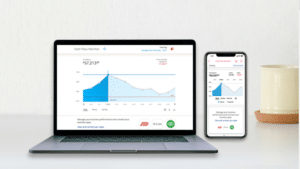
According to Pascal, small businesses digital engagement with the bank is “significantly outpacing” that of consumers. Clients can send and receive payments through Zelle, which has higher limits for small businesses. Business Advantage 360 shows insights around cash flow and performance. Beyond banking and accounting, clients can also link their business and personal accounts to have more of their banking relationships in one place.
Intuit’s QuickBooks is becoming an increasingly popular choice with banks for accounting software integrations. Last month, BMO announced an API integration with QuickBooks that would route transactional data directly into the accounting platform with clients’ consent. The bank is currently piloting the solution and plans to take it national in Canada next year. Hugh McKee, head of BMO partners, said the bank worked with Intuit for about a year to develop the API. “We are now doing final testing and will proceed to client migration,” he said. “On the BMO side, we have tackled most of the development for this initiative. Intuit has been crucial in helping to define the requirements, and we’re jointly working to test the integration.”
See also: FIs and fintechs innovate with an eye on SMBs
Chase also allows clients to integrate banking data directly into QuickBooks. According to John McCourt, national field director for Chase Business Banking, the bank fast-tracked co-browsing technology during the pandemic in order to help resolve clients’ tech issues. He added that the accounting software integration provides a better client experience.
“It’s really about helping small business owners save time and better manage their finances, depending on their needs,” McCourt said.
Bank Innovation Build, which takes place Sept. 9-10 as a virtual experience, is a must-attend industry event for professionals overseeing financial technologies, product experiences and services. Register here.
Related Posts