Sequoia bets on two teens to transform adviser relationships

Vise wants to drastically shorten the time consumers spend building portfolios with their financial advisers. The AI-powered portfolio management company claims advisers can use its tech to create personalized portfolios for clients in 30 seconds, a process that previously took up to two hours, according to Vise co-founder and CEO Samir Vasavada.
“Most [robo-advisers] are generic allocations of different [exchange-traded funds] based on a client’s risk criteria. So you’re going to get this 40/60 blend if you’re relatively risk-averse, or whatever it might be,” Vasavada said. “What we’re doing is truly personalizing portfolios to every client’s need.”
Vise announced a $14.5 million Series A funding round today led by Sequoia Capital, which counts PayPal, Apple, Square and Stripe as its previous bets. Vasavada and co-founder Runik Mehrotra, both 19 years old, are marketing their platform to financial advisers as a way to automate portfolio creation so they can focus on building relationships. Through a mixture of quantitative algorithms and artificial intelligence, the platform can create a portfolio based on clients’ employment, family and life goals.
Say, for example, a client works at Facebook, has a spouse that works in travel, wants to send children to college in 10 years, only wants to invest in environmentally friendly stocks and is relatively risk-averse. Advisers using Vise can input that information, along with how much the client wants to invest and how much they need to retire, and the platform creates a portfolio. For such a client, Vise might avoid overexposing the client to tech stocks because they already have some through Facebook, or the platform might avoid travel-related stocks because of the spouse.
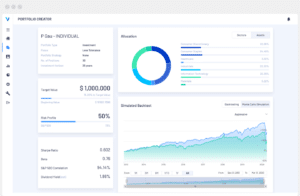
New York-based Vise, initially founded in 2016, also provides advisers with what it calls “portfolio intelligence,” or an automated explanation advisers can use to tell clients why they are investing in certain stocks and avoiding others. The company’s AI algorithms can build customized indexes that reduce bias when predicting future returns, according to Mehrotra. The platform also takes tax decisions into account when rebalancing client portfolios. Vise is already available to sub-advisers using the Charles Schwab or TD Ameritrade platform, and has commitments representing $800 million in assets under management.
See also: As markets plunge, robo-advisers urge caution
Peter Thiel’s Founders Fund, Bling Capital, Human Capital, Lachy Groom, Steve Chen, co-founder of YouTube and Jon Xu, co-founder of FutureAdvisor, all participated in the Series A. Vise will use the money to continue growing its team, which already includes former employees of Morgan Stanley, Merrill Lynch, Bloomberg, Google and Palantir. Mehrotra said Vise wants to continue building out its adviser network through marketing and grow its partnership integrations.
Sequoia believes the two teenagers have the right solution at the right time. “Rarely have I met founders as talented as Samir and Runik, and never with tailwinds as compelling as with Vise,” said Shaun Maguire, the Vise chairman and a partner at Sequoia Capital, in a statement. “This is one of the biggest markets on Earth, currently being revolutionized by the perfect storm of consumers pushing for more personalization, advisers seeking advanced technology so they can be even better at their jobs, and the industry moving toward zero-commission trades.”
As for launching a new financial service during the COVID-19 pandemic, Vasavada said market volatility causes consumers to grapple with their finances, and advisers often see an uptick in clients during a recession.
But it remains to be seen whether automated investing will catch on with advisers the way it has with consumers. Direct-to-consumer robo-adviser Betterment, for example, has $21 billion in assets under management, while Wealthfront has more than $22 billion. However, Vise says it’s targeting a different customer segment.
“Most of the robo-advisers deviate to the tail end of the market,” Vasavada said. “They’re not sophisticated enough for the higher net worth customer with a more complicated financial scenario.”