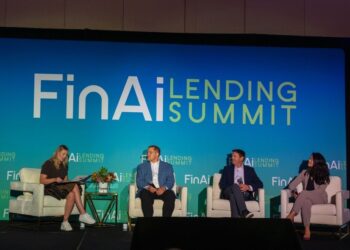
Leaders at four credit unions shared steps financial institutions (FIs) can take to create a “culture of artificial intelligence” during a webinar last week.

Artificial intelligence (AI) isn’t always an option, even for small credit unions, the panel agreed. Mark Rowan, chief technology officer for $2.1 million Denver-based Credit Union of Colorado, pointed to the fact the four credit unions were participating in a webinar panel sponsored by fintech Scienaptic AI, which specializes in applying AI to credit decisioning.
“I was reading the other day, in the last three years fintechs have grown by about 4,000, in the U.S. alone. Credit unions last year, and the last three years, have shrunk by 1,000,” Rowan said. “Now those fintechs are all using some sense of AI and machine learning to help the product. We have to make that part of our strategic roadmap.”
Rowan and his fellow panelists shared their advice for moving forward by creating a culture of AI.
1. Win over the board
Support from a credit union’s board of directors is key, said Floyd Rummel, chief executive officer of $125.8 million Northern Hills Federal Credit Union, based in Sturgis, S.D.
“The first thing is — especially in the smaller credit unions — you’ve got to get your boards educated and involved, and then your senior management … you need them to fall in line,” Rummel said. “They need to get their boards educated on what AI means, what it can do, and how other people are using it.”
The board should clearly understand that AI needs to be part of the strategic plan, Rummel said.
“And not only put it into plan but then act upon it … actually have some action items and move that along,” he added.
2. Educate leadership and staff
Understanding AI use cases at credit unions be a challenge, Rowan said.
“To be honest, AI is kind of a difficult concept to get your head wrapped around because you get AI, we get machine learning and deep learning and … what is it actually doing?” he said. “How does that fit to the FI space?”
AI can change how people perform their jobs, Rummel said, so it’s important “to assure them that AI is not going to put anybody out of work, it’s just going to change what maybe their workflow is in being able to help them out,” he added.
To that end, Rowan hosted an AI education session for his staff, with videos and other materials to show the team what the technology can do.
The $29.6 million Watertown, N.Y.-based Northern Credit Union recently held a companywide AI training session as part of its strategic planning, said Daniel Estal, vice president of lending.
“Bringing it into the fold with culture, bringing it to the frontline and getting everybody engaged in it is so important,” Estal said.
Taking the time to educate gives a credit union’s individual teams a chance to understand what AI is, help them digest it, and gives them with a voice in the process, he added.
“Even to see beyond that solution, how it impacts them, and how they can take their careers to another level through it,” Estal said. “Getting that buy-in is critical across the board.”
3. Incorporate AI into strategic planning
The Credit Union of Colorado made AI education and brainstorming part of its strategic planning process.
Rowan hosted a break-out session on AI during the credit union’s planning session with about 65 branch managers and executive leaders, during which he showed his team a video on how the credit union was already utilizing the technology.
“I think a lot of people forget that if you’re doing any kind of real-time fraud, information security at all, or your members are using a Visa debit or credit card, you’re using AI today, and your members are using it,” Rowan said.
The group then broke into eight smaller groups to discuss topics such as how AI could benefit their lines of business and change the member experience.
“To be honest … I didn’t know how much input we were going to get from staff, but it was overwhelming, how passionate they were about it,” Rowan said. After that planning session, Rowan said he received emails “non-stop” and held follow-up meetings with staff who wanted to further discuss the tech.
“It’s really important to make it part of your strategic roadmap, but it’s also a culture thing,” he said. “We’ve got to make AI part of our culture.”