B2B payments companies seek growth amid pandemic

Despite the current economic uncertainty resulting from COVID-19, some business-to-business payment companies are gaining traction with clients and investors alike.
“Our solution is even more relevant today than it was four weeks ago,” said Sameer Gulati, chief operating officer of the payments company Plastiq. “Some of our customers are already using Plastiq as a bridge while they’re going through the process of applying for an SBA loan and hopefully getting approved, but they don’t know yet. If the stimulus checks are on their way, until that point you want to stay open for business. You want to make sure your key suppliers are getting paid.”
San Francisco-based payments companies Plastiq and Fast both hope to offer business clients a payment experience that can improve clients’ bottom lines, and they have the fundraising rounds to back it up. Last week, Fast announced a $20 million Series A, while Plastiq announced a $75 million Series D.
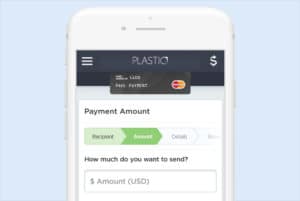
Plastiq started as a consumer payments company before pivoting to primarily serve small businesses about a year ago. The company helps customers pay clients through means like ACH and wire transfers, but its primary service is allowing small businesses to pay using their credit card, even with clients who don’t accept cards. According to Gulati, Plastiq helps small businesses avoid taking on new debt offered by competitors like digital lenders. Its customers’ clients, meanwhile, can accept payments in any form they like.
Plastiq, founded in 2012, charges clients a 2.5% fee, which Gulati said is offset by credit card rewards points and the fact that companies can categorize the fee as a business expense during tax season. According to Gulati, Plastiq has an advantage over competitors during a potential downturn. “As we saw in the 2008 to 2009 period, new credit is the first to shrink,” he said. “This product solves a real need on an instrument like the credit card, which everybody understands.” Gulati said Plastiq has more than 1 million clients, and the company ended last year with more than a $2 billion volume run rate.
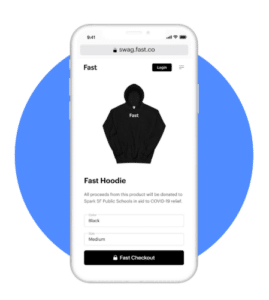
Fast, meanwhile, partners with e-commerce merchants to offer consumers one-click payments. With Fast Checkout, consumers input their payment info once and can pay with one-click from then on with any merchant on the Fast platform. The company, founded in 2019, charges merchants a percentage of each transaction, pitching increased conversion rates and sales to merchants. Fast encrypts and tokenizes all payment info for security purposes.
According to Fast co-founders Allison Barr Allen and Domm Holland, coronavirus is pushing consumers to shop online, but its product was already appealing before the pandemic. “We didn’t plan on these global events happening, and we’ve been really bullish on this for a long time,” Allen said. She added that while only 11% of U.S. retail sales are made online, that number is growing at about 15% to 20% each year. “What’s happening now only accelerates a lot of what was happening before,” she said.
See also: Umpqua’s Go-To sees usage spike as customers avoid branches
With the $20 million round, Fast is growing its product and engineering teams to facilitate the rollout of its products, and the company wants to further its marketing and partnership efforts. Payments giant Stripe led the round, with Index Ventures and Susa Ventures participating. According to Holland, Stripe and Fast have a symbiotic relationship since Stripe powers the backend of e-commerce sales while Fast is a consumer-facing tool for merchants. Fast is working with Stripe to onboard merchants.
Plastiq, which already partners with U.S. Bank, will use its $75 million round to develop new products and partnerships, and help to hire product, design and tech employees. B Capital Group led the round, while Kleiner Perkins, Khosla Ventures, Accomplice and Top Tier Capital Partners all participated.
Like Fast, Plastiq feels its product benefits business clients, regardless of coronavirus. Although the ability to pay with credit cards can help small businesses during a recession, Gulati said the product can help companies scale using their pre-existing credit, crucial even during a strong economy.
Gareth Lodge, a senior payments analyst at Celent, said Plastiq might be better prepared than its competitors to help small businesses during the pandemic because it doesn’t create new debt, but prolonged lockdowns could make clients look elsewhere as revolving debt can be expensive. As for Fast, he said coronavirus could have a multipronged effect.
“Card companies are already reporting reduced volumes both on and offline as a result of COVID,” Lodge said. “The impact will in part come down to the length of the crisis. While volumes may be down, it is likely that adoption of e-commerce will become more widespread, laying the foundations for potential future growth.”